

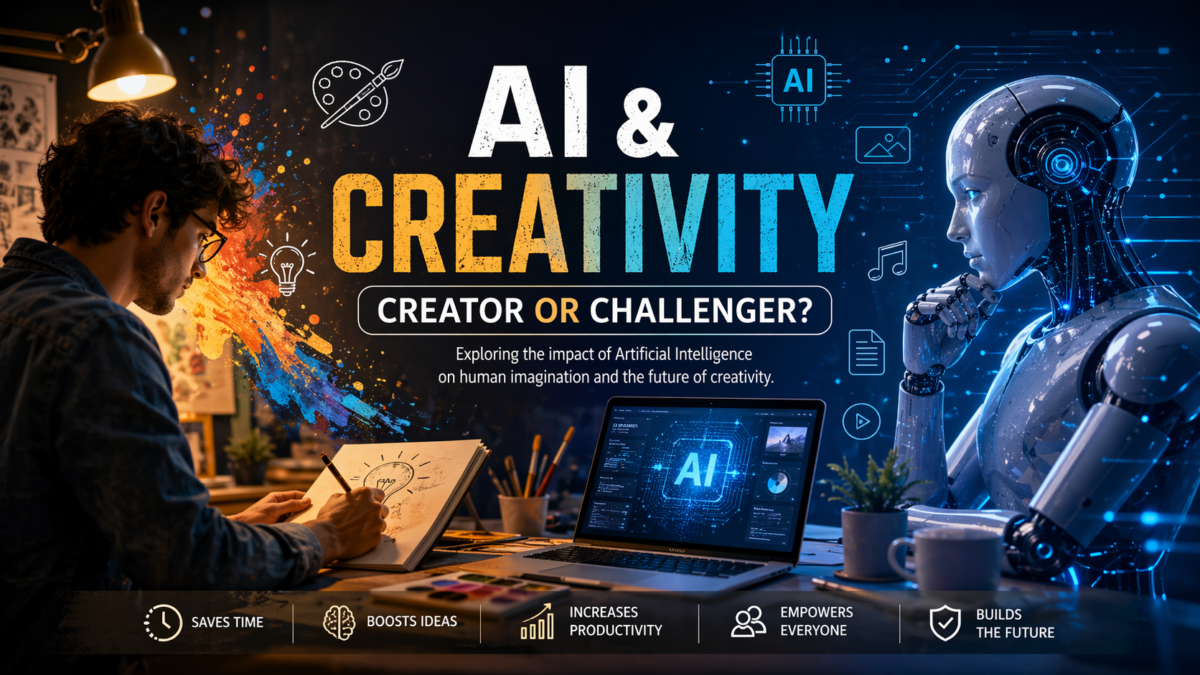
Artificial Intelligence (AI) is no longer just a futuristic concept—it has become a powerful force shaping the way we create, think, and express ideas. From writing articles and generating images to composing music and designing graphics, AI is entering spaces that were once considered purely human domains. This rapid evolution has sparked an important debate: Is AI a new creator, or is it a challenge to human creativity?
Let’s explore this complex and fascinating topic on AI creativity vs human creativity in depth.
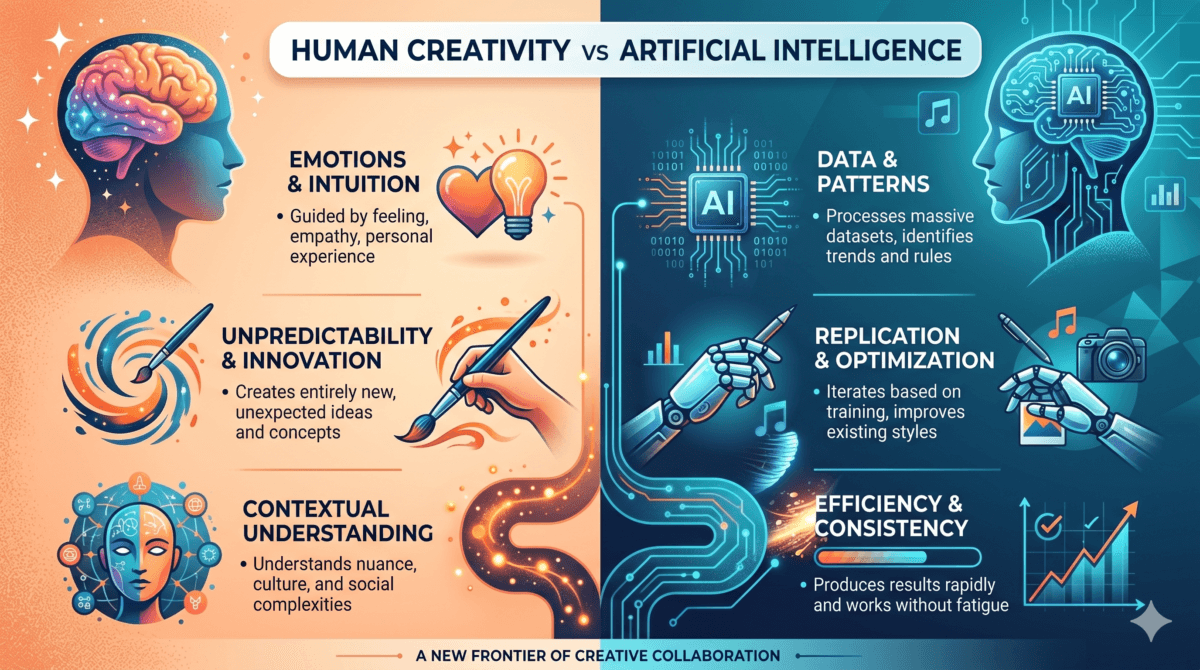
Table of Contents
Also Read : ChatGPT Images 2.0 Launched: Features, Capabilities & Real Comparison with Gemini
The Rise of AI in Creative Fields
Over the past few years, AI tools have advanced at an extraordinary pace. Today, anyone with a smartphone or laptop can generate high-quality content within seconds. Whether it’s writing blogs, designing logos, editing videos, or even creating realistic artwork, AI-powered platforms are making creative tasks faster and more accessible.
This accessibility has democratized creativity. Earlier, creating professional-level content required years of practice and technical skills. Now, AI tools assist beginners in producing impressive results without deep expertise.
For example:
- Writers can draft articles in minutes
- Designers can generate visuals instantly
- Musicians can compose melodies with AI assistance
This shift has significantly lowered the barrier to entry in creative industries.
AI as a Creative Assistant
Rather than replacing humans entirely, AI is often seen as a creative assistant. It helps speed up processes, provides inspiration, and removes repetitive tasks.
Imagine a writer facing writer’s block. AI can suggest ideas, outlines, or even draft paragraphs. Similarly, a designer can use AI to explore multiple concepts quickly before finalizing a design.
In this sense, AI acts like a collaborator rather than a competitor.
Benefits of AI in Creativity:
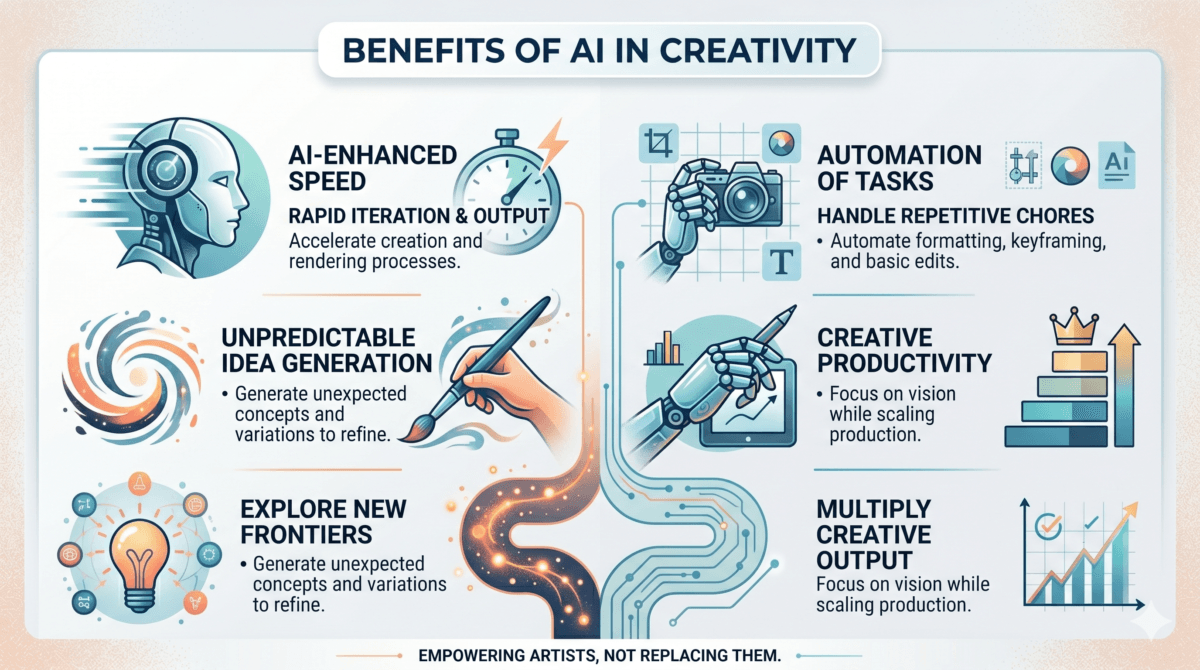
- Saves time and effort
- Enhances productivity
- Sparks new ideas
- Assists beginners
- Enables experimentation
For professionals, this means more time can be spent on refining ideas rather than starting from scratch.
Also Read : Is AI Doctor Chatbot Reliable? Understanding the Role of AI in Healthcare
The Concern: Is Creativity Losing Its Human Touch?
Despite its advantages, AI raises serious concerns about originality and authenticity. Creativity has always been considered a uniquely human trait—deeply connected to emotions, experiences, and imagination.
AI, however, does not “feel” anything. It generates content based on patterns, data, and algorithms. This leads to an important question:
Can something created by AI truly be called creative?
Critics argue that AI-generated content lacks:
- Emotional depth
- Personal experience
- Cultural nuance
- True originality
While AI can mimic styles and produce impressive outputs, it does not possess consciousness or intent. It does not create from lived experiences—it generates from learned data.
The Risk of Over-Reliance on AI
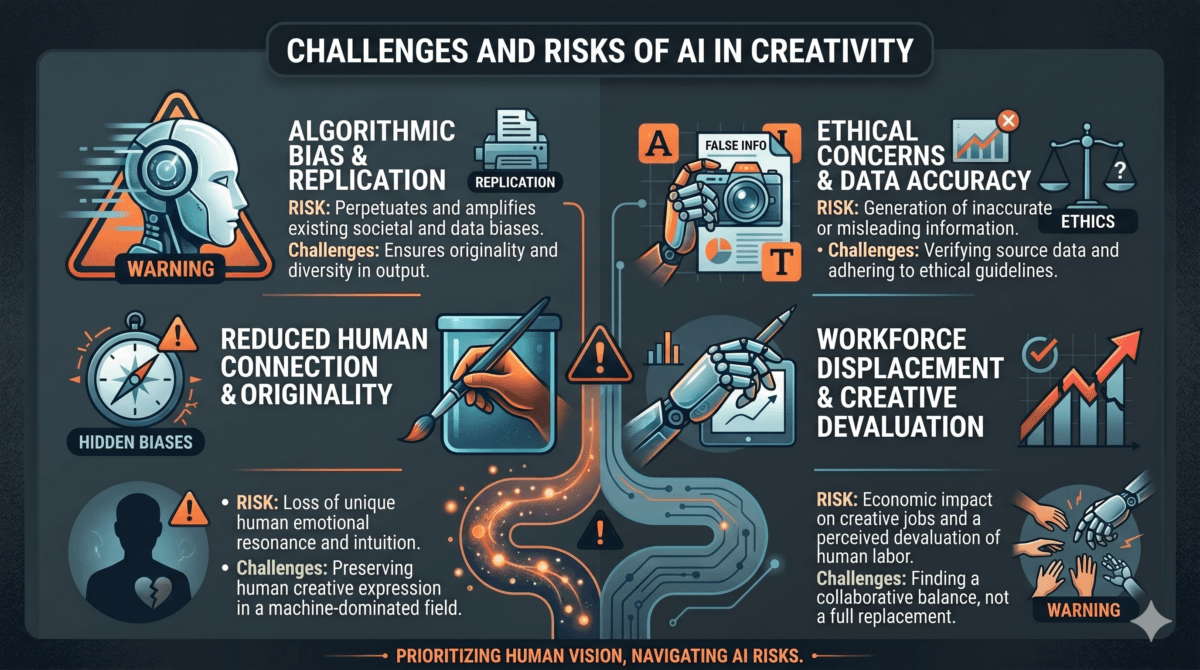
One of the biggest challenges is the growing dependency on AI tools. As people rely more on AI for creative tasks, there is a risk that human skills may gradually weaken.
For example:
- Writers may stop practicing original writing
- Designers may rely heavily on templates
- Artists may lose their unique style
If creativity becomes automated, the value of human originality could diminish over time.
This doesn’t mean AI is harmful—but unchecked reliance can lead to a decline in creative thinking.
Check AI growth Statisctics at World Economic Forum
AI and Content Authenticity
Another major issue is authenticity. With AI generating massive amounts of content daily, it becomes difficult to distinguish between human-created and machine-generated work.
This creates challenges such as:
- Plagiarism concerns
- Misinformation spread
- Lack of accountability
- Reduced trust in content
For readers and audiences, authenticity matters. People connect with stories, emotions, and real experiences—something AI struggles to replicate genuinely.
Check More Information on AI ethics and concerns
Also read : 50 Best ChatGPT Prompts for Editing Uploaded Photos (2026 Guide)
Opportunities Created by AI
While challenges exist, AI also opens up new opportunities that were unimaginable before.
1. Empowering Non-Experts
People without formal training can now create content easily. A small business owner can design marketing materials, write blogs, and manage social media without hiring large teams.
2. Boosting Innovation
AI enables rapid experimentation. Creators can test multiple ideas quickly and refine them efficiently.
3. Expanding Creative Boundaries
AI can combine styles, generate unexpected ideas, and push creative boundaries beyond human imagination.
4. Supporting Accessibility
AI tools help individuals with disabilities express themselves creatively, making the creative world more inclusive.
Also read : Google Translate Turns 20: AI-Powered Pronunciation Practice Marks a New Era
AI Creativity vs Human Creativity: Not a Competition
The debate is often framed as AI vs Humans, but this perspective is misleading. The real question is not who is better—it’s how both can work together.
Human creativity is driven by:
- Emotions
- Experiences
- Intentions
- Cultural understanding
AI creativity is driven by:
- Data
- Patterns
- Algorithms
- Speed
These two forms of creativity are fundamentally different, yet complementary.
Instead of competing, they can form a powerful partnership.
Also Read : Forget Royalty-Free: Create Your Own Bollywood Hits & Festive Beats with Gemini’s New AI Music Tool
The Future of Creative Work
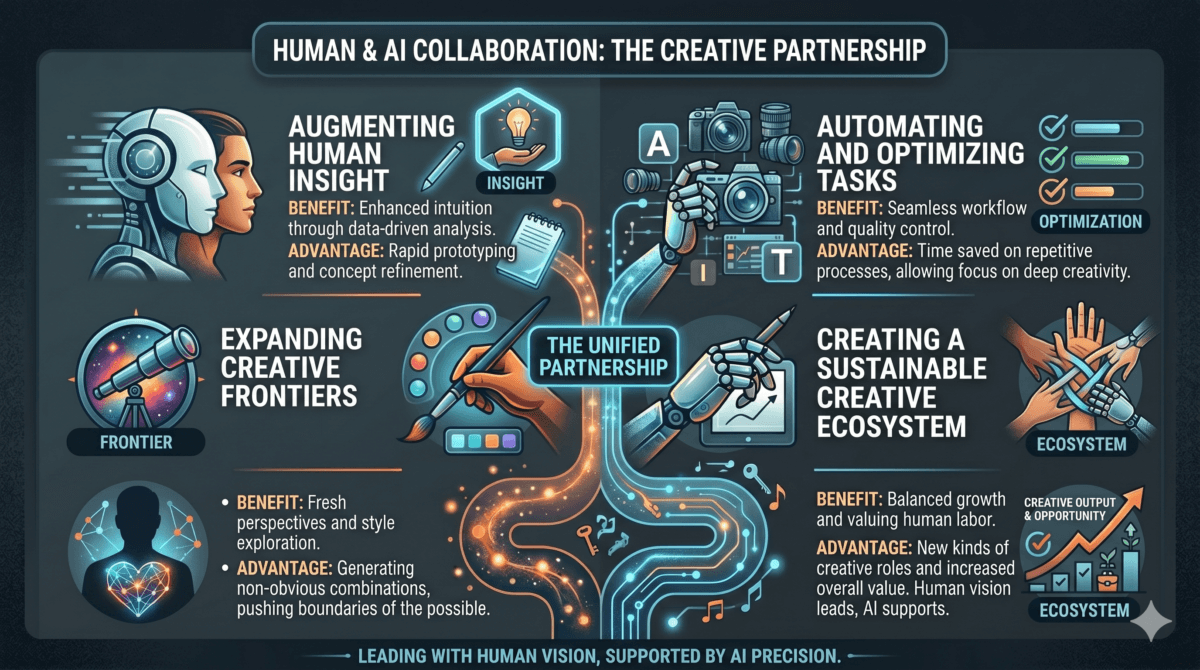
The future will likely be a hybrid model where humans and AI collaborate.
What will change?
- Routine creative tasks will be automated
- Idea generation will become faster
- Content production will scale massively
What will remain human?
- Storytelling
- Emotional connection
- Ethical decision-making
- Original thinking
Creative professionals who adapt to AI will have a significant advantage. Those who resist it completely may struggle to keep up.
Check More Information on future of AI creativity
Ethical and Social Implications
AI in creativity also raises ethical questions:
Who owns AI-generated content?
If AI creates something, who is the real creator—the user or the machine?
Is it fair to use AI-trained data?
AI models are trained on vast datasets, often including human-created work. This raises concerns about consent and intellectual property.
Will jobs be replaced?
Some creative roles may evolve or disappear, while new roles will emerge.
These questions need careful consideration as AI continues to grow.
Maintaining Human Creativity in the AI Era
To ensure creativity doesn’t lose its human essence, a balanced approach is essential.
Practical Tips:
- Use AI as a tool, not a replacement
- Focus on original ideas and storytelling
- Develop personal style and voice
- Keep learning and experimenting
- Avoid over-dependence on automation
The goal should be to enhance creativity, not replace it.
Also Read : OpenAI AI Smartphone Plan: Custom Chips with MediaTek & Qualcomm Could Kill the App Era
Final Thoughts
AI is neither purely a creator nor purely a challenge—it is both.
It has the power to:
- Transform creative industries
- Empower individuals
- Accelerate innovation
At the same time, it also:
- Challenges originality
- Raises ethical concerns
- Risks over-dependence
The real impact of AI depends on how we choose to use it.
If used wisely, AI can become one of the greatest tools for human creativity. But if relied upon blindly, it could weaken the very essence of creative expression.
Conclusion
The rise of AI marks a turning point in the history of creativity. We are entering an era where machines can assist in creating art, content, and ideas—but the soul of creativity still belongs to humans.
Rather than fearing AI, we should learn to collaborate with it.
Because in the end, AI can generate content—but only humans can give it meaning.
FAQs
1. Can AI replace human creativity completely?
No, AI can assist but cannot fully replace human creativity, which is driven by emotions and experiences.
2. Is AI-generated content original?
AI content is based on existing data patterns, so it may lack true originality compared to human-created work.
3. How can creators use AI effectively?
By using AI as a support tool for ideas, drafts, and efficiency while maintaining their unique voice.
4. Is AI a threat to creative jobs?
It may change job roles, but it will also create new opportunities in the creative industry.
5. What is the future of AI and creativity ?
A collaborative model where humans and AI work together to produce better and faster creative outputs.

Ayush Singhal is the founder and chief editor of TechMitra.in — a tech hub dedicated to simplifying gadgets, AI tools, and smart innovations for everyday users. With over 15 years of business experience, a Bachelor of Computer Applications (BCA) degree, and 5 years of hands-on experience running an electronics retail shop, Ayush brings real-world gadget knowledge and a genuine passion for emerging technology.
At TechMitra, he covers everything from AI breakthroughs and gadget reviews to app guides, mobile tips, and digital how-tos. His goal is simple — to make tech easy, useful, and enjoyable for everyone. When he’s not testing the latest devices or exploring AI trends, Ayush spends his time crafting tutorials that help readers make smarter digital choices.
📍 Based in Lucknow, India
💡 Focus Areas: Tech News • AI Tools • Gadgets • Digital How-Tos
📧 Contact: Get in touch →
🔗 Full Bio: https://techmitra.in/about-us/