

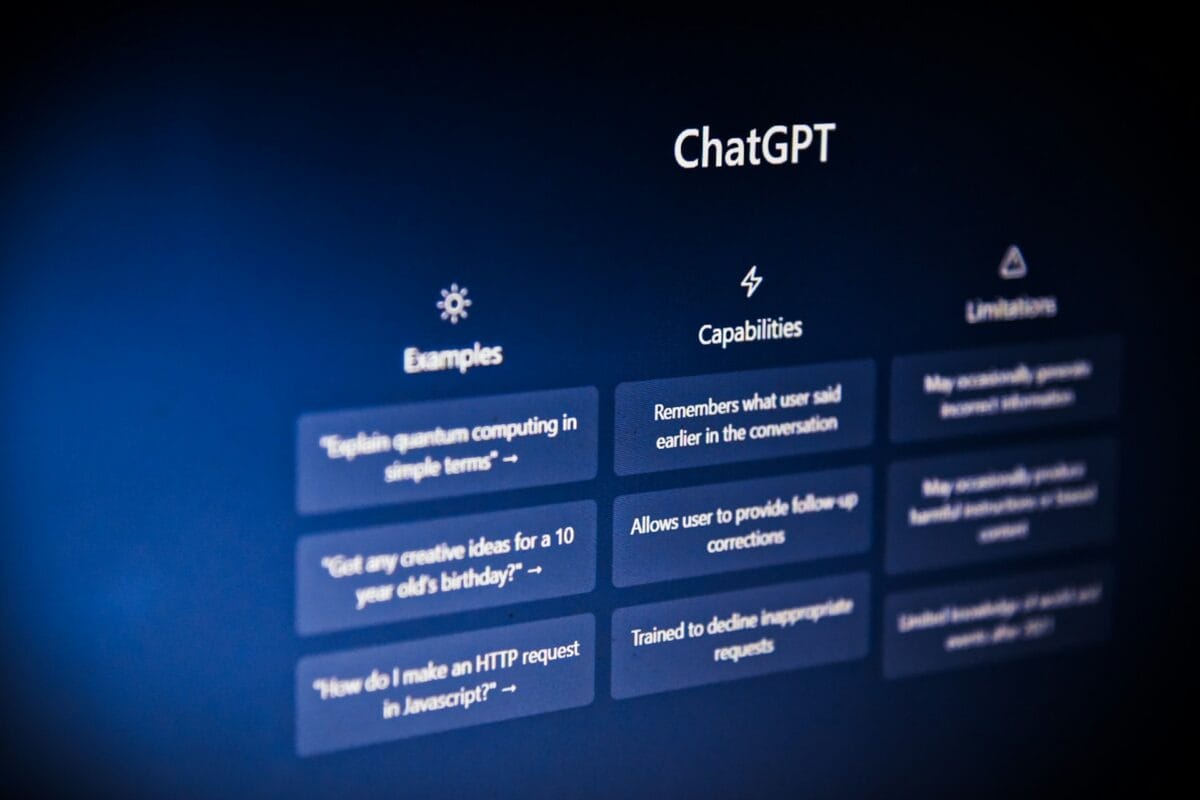
OpenAI has rolled out ChatGPT for Teens, a separate experience for users aged 13–17 that layers on stricter safety defaults, study-focused tools, and new parental controls. The announcement, published August 18, 2026, marks OpenAI’s most concrete step yet toward treating teen users as a distinct category rather than a scaled-down version of the adult product.
For a country like India — where ChatGPT has become a fixture of how school and college-going teens study, often with little to no parental oversight — this launch is worth paying close attention to.
Also read : ChatGPT Free vs Go vs Plus vs Pro vs Business: Which Plan Should You Choose in 2026?
What’s Actually Changing
According to OpenAI, any user its system estimates to be under 18, or who states their age as 13–17, is now automatically routed into ChatGPT for Teens. The redesign leans on two things: getting teens to actually learn rather than just extract answers, and making safety the default rather than something a parent has to configure from scratch.
On the learning side, the centerpiece is Study Mode, which walks a student through a problem with guiding questions and knowledge checks instead of just spitting out a solution. OpenAI has paired this with what it’s calling responsible homework reminders — the system tries to notice when someone’s clearly trying to shortcut an assignment and pushes them back toward Study Mode instead. There’s also a set of quizzes and learning visualizations for self-testing and working through harder concepts, plus Study Hours, which lets a teen or parent schedule specific windows where Study Mode switches on automatically.
The safety side is arguably the bigger shift. Model behaviour for under-18 accounts is now tied to what OpenAI calls its “Under-18 Model Spec,” with tighter handling around self-harm, violence, eating disorders, dangerous activities, and explicit content. Parents who’ve linked a teen account get access to Quiet Hours, some setting controls, and notifications in a limited set of high-risk situations — including, newly, alerts tied to eating disorders. Perhaps the more interesting change is behavioural rather than topical: the model is now explicitly barred from using romantic language, encouraging emotional dependence, or implying it has feelings of its own, which reads as a fairly direct response to growing concern about teens forming attachment-like relationships with chatbots. There’s also a smaller but practical addition — a reminder that nudges teens before they upload sensitive or private images.
OpenAI has also announced a “signature partnership” with CodeAI, an education-focused organization, aimed at giving students and educators resources to understand how AI works — not just how to use it.
Also Read : AI Tools Drove 144.5 Billion Web Visits in the Last Year — And Just 100 Platforms Captured 90% of Them
Why This Matters for India
A few things make this launch particularly relevant here, beyond just “another OpenAI feature drop”:
1. Indian teens are already using AI heavily, while India’s AI-specific safeguards for minors are still developing. Several US states have introduced or proposed age-verification and AI-safety requirements for minors, adding pressure on AI companies to strengthen protections for younger users. India has a broader child-data protection framework in the DPDP Act and Rules (more on that below), but no AI-specific rules for minors yet. That means Indian teens end up inheriting whatever safety defaults OpenAI ships globally, rather than protections shaped by India-specific requirements.
2. The “homework shortcut detection” feature will be tested hard in India’s exam culture. Board exams, competitive entrance tests (JEE, NEET), and a culture that often rewards the answer over the process mean Indian teens are precisely the demographic most likely to try prompting around Study Mode. Whether OpenAI’s detection holds up against determined, exam-pressured teenagers is an open question worth revisiting once the feature has been live for a few months.
3. These protections only work if parents actually turn them on. Features like Quiet Hours and safety notifications require a parent to link their account to their teen’s in the first place. That’s an active step — not a default — so the real-world safety benefit depends heavily on how many Indian parents even know the option exists. Awareness, not the technology, is likely to be the bottleneck.
4. This lands right as India’s own child-data rules are coming into force. India’s Digital Personal Data Protection Rules, 2025 — notified in November 2025 — require “verifiable consent” from a parent or guardian before a platform processes a child’s personal data, with different provisions taking effect in stages, including major compliance obligations beginning in 2027. OpenAI’s age-estimation and parental-linking system is an example of the kind of age and consent architecture that will become increasingly relevant as India’s child-data rules take effect.
What Indian Parents Can Actually Do
If you have a teenager using ChatGPT, none of this kicks in automatically on your end — you’re the one who has to set it up. Start by linking your account to theirs; nothing else (Quiet Hours, safety notifications, setting controls) becomes available until that’s done. It’s also worth checking which account your teen is actually using — if they’ve misstated their age, or they’re logging in through a parent’s or sibling’s adult account, they may never get routed into the teen experience at all, protections included.
Study Mode is also worth talking about directly rather than assuming it’s doing its job in the background. It only kicks in by default during scheduled Study Hours — outside those windows, a teen can still ask ChatGPT for a straight answer. If you actually care about homework quality, setting up Study Hours is a more reliable lever than trusting the “shortcut detection” to catch everything on its own. And it’s worth setting expectations on notifications too: OpenAI describes these as limited to genuinely high-risk situations, not a running feed of what your teen is asking. This isn’t a monitoring tool, and it shouldn’t be treated like one.
The Open Questions
A few things OpenAI’s announcement doesn’t fully address. How reliable is the age estimation in practice — OpenAI says it either estimates automatically or takes a self-reported age, and the second of those is trivial for a teen to misstate, with no published accuracy figures on the first. It’s also unclear what happens to a user’s existing chat history when their account gets switched into the teen experience. And the biggest unknown is simply whether Study Mode’s step-by-step approach actually cuts down on copy-paste homework use, or whether determined students just find a workaround — possibly a different tool entirely.
Bottom Line
ChatGPT for Teens is a meaningful, if imperfect, step toward safer AI use among minors — and it lands at a moment when Indian teens’ everyday AI use is running well ahead of any local safety conversation about it. For Indian parents, the practical takeaway is simple: the controls now exist, but you have to actively set them up. For students, it’s a signal that “just get ChatGPT to do it” is going to get incrementally harder — and that’s probably the point.
Sources: OpenAI, “Introducing ChatGPT for Teens”, August 18, 2026. Ministry of Electronics and IT, “Government notifies DPDP Rules”, November 2025.

Ayush Singhal is the founder and chief editor of TechMitra.in — a tech hub dedicated to simplifying gadgets, AI tools, and smart innovations for everyday users. With over 15 years of business experience, a Bachelor of Computer Applications (BCA) degree, and 5 years of hands-on experience running an electronics retail shop, Ayush brings real-world gadget knowledge and a genuine passion for emerging technology.
At TechMitra, he covers everything from AI breakthroughs and gadget reviews to app guides, mobile tips, and digital how-tos. His goal is simple — to make tech easy, useful, and enjoyable for everyone. When he’s not testing the latest devices or exploring AI trends, Ayush spends his time crafting tutorials that help readers make smarter digital choices.
📍 Based in Lucknow, India
💡 Focus Areas: Tech News • AI Tools • Gadgets • Digital How-Tos
📧 Contact: Get in touch →
🔗 Full Bio: https://techmitra.in/about-us/