

A growing share of searches don’t end with someone clicking a blue link anymore. They end with someone reading an answer that ChatGPT, Perplexity, or Google’s AI Overview generated on the spot — often without visiting any website at all. When that happens, your site either gets cited as a source, or it doesn’t exist as far as that reader is concerned.
This guide covers what LLM SEO actually is, how AI tools decide what to cite, what genuinely helps, and — importantly — what doesn’t, based on the actual evidence available so far.
Table of Contents
Also read : What is SEO, What Are Its Different Types And Its Benefits? (2026 Guide)
What is LLM SEO?
LLM SEO (also called AI SEO, AEO — Answer Engine Optimization, or GEO — Generative Engine Optimization) is the practice of optimizing your website so AI tools like ChatGPT, Gemini, Perplexity, Claude, and Microsoft Copilot can find, understand, and cite your content when generating an answer.
Traditional SEO competes for a position in a list of results. LLM SEO competes to be one of the sources an AI model actually pulls from and mentions in its answer.
It isn’t a separate discipline that replaces traditional SEO — it sits on top of the same foundation: crawlable pages, clear content, and real authority.
Traditional SEO Vs LLM SEO (AI SEO)
| Traditional SEO | LLM SEO (AI SEO) |
|---|---|
| Goal is to rank higher in search engine results pages (SERPs). | Goal is to become a cited source in AI-generated answers. |
| Success depends heavily on rankings and click-through rate (CTR). | Success depends on whether AI systems select and reference your content. |
| Optimizes for search engines like Google, Bing, and DuckDuckGo. | Optimizes for AI platforms like ChatGPT, Google AI Overviews, Perplexity, Gemini, Claude, and Microsoft Copilot. |
| Focuses on keywords, backlinks, technical SEO, and user experience. | Builds on traditional SEO while emphasizing clear answers, structured content, originality, and authority. |
| Users typically click through to visit your website. | Users may get the answer directly, with or without clicking your website. |
| Rankings are measured using tools like Google Search Console, Bing Webmaster Tools, and SEO platforms. | AI citations are monitored by testing queries, tracking AI referral traffic, and watching crawler activity, though standardized reporting is still limited. |
| Primary objective is to increase organic traffic. | Primary objective is to increase visibility, authority, and citations within AI-generated responses. |
Key takeaway
LLM SEO doesn’t replace traditional SEO (On page SEO & Off Page SEO differences)—it builds on it. Strong technical SEO, high-quality content, and genuine authority remain the foundation, while LLM SEO focuses on making that content easy for AI systems to understand, summarize, and cite.
How AI Tools Actually Decide What to Cite
AI platforms use crawlers like GPTBot, ClaudeBot, PerplexityBot, and Googlebot to discover content before retrieval systems decide what to cite. When someone asks an AI tool a question it can’t fully answer from its training data, most AI tools send the query out to a live search engine and summarize what comes back. Where that search happens varies by platform:
- ChatGPT’s live search (when enabled) commonly relies on Bing’s search index, making Bing visibility more valuable than many publishers previously realized
- Perplexity uses its own crawler plus other sources
- Google AI Overviews pull from Google’s own index
This is one practical reason Bing performance matters more than it used to for many sites — ranking on Bing gives you a real shot at being pulled into a ChatGPT answer too.
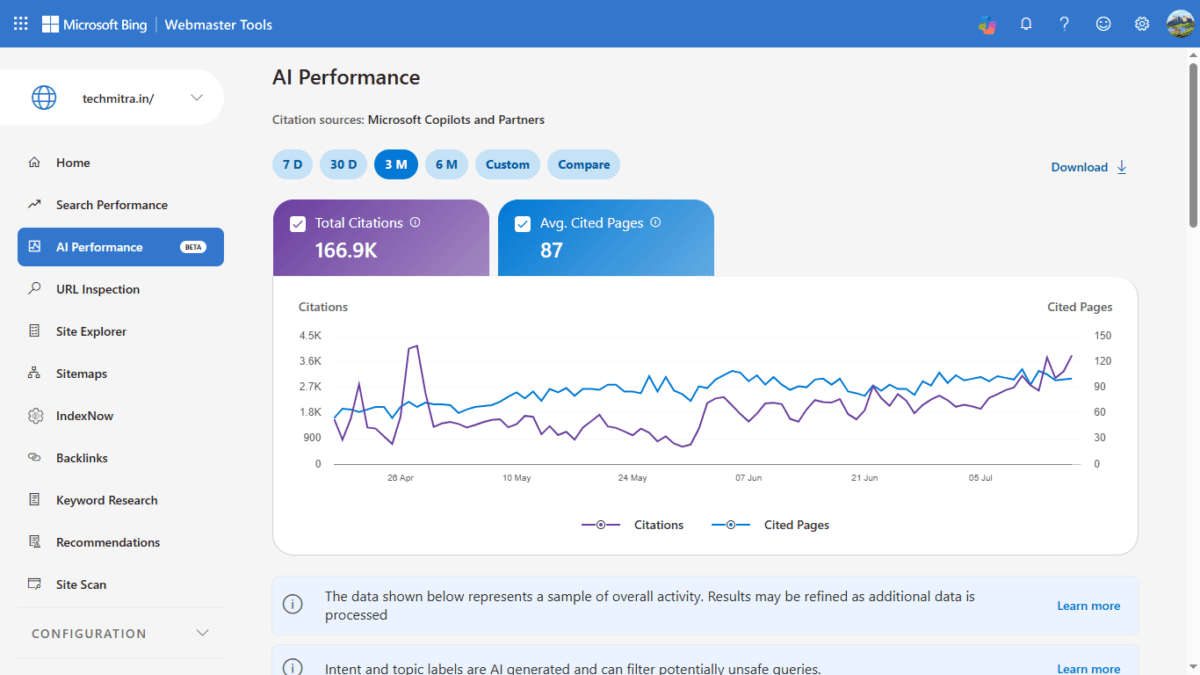
Once the model has a set of candidate pages, it evaluates them for topical relevance, clarity, consistency with other sources, and how recent the information is — then extracts and summarizes what seems most useful, in its own words.
For the deeper technical side of this — including how to check whether AI crawlers can actually reach your content — see our Technical SEO Checklist guide.
What Actually Helps
Clear, direct answers placed early. AI tools extract short, self-contained explanations far more easily than content that builds up to the point slowly. If a page answers the question in the first two sentences of a section, it’s easier to lift out of context than a page that requires reading five paragraphs to get there.
Structured content. Proper H2/H3 headings, bullet points, comparison tables, and clearly separated Q&A sections make content easier for a model to parse and extract cleanly — regardless of whether that structure is marked up in schema (more on that below).
Freshness. Dated, regularly updated content signals it’s still accurate. A page that says “Updated July 2026” is a more attractive source than one with no visible date at all.
Depth and originality. Thin, reworded summary content rarely gets cited. First-hand data, real numbers, named expertise, and original testing are what separate a cited source from a page that gets skipped.
Genuine authority. LLM SEO doesn’t bypass the need for real backlinks, brand mentions, and a track record — it depends on it, the same way traditional search ranking does.
What Doesn’t Help as Much as You’d Think: Schema Markup
Most LLM SEO guides tell you schema markup (FAQPage, Article, Organization JSON-LD) is essential for AI citations. The actual evidence is more mixed than that advice suggests, and it’s worth knowing before you spend time on it.
The claim: AI models read your schema markup directly and use it to decide what to cite.
What’s actually been tested: In February 2026, SEO researcher Mark Williams-Cook ran a controlled experiment — he embedded a fake address inside invalid, made-up JSON-LD on a page, with no matching text visible anywhere else on the page. Both ChatGPT and Perplexity extracted and returned that address anyway. That result shows something specific: LLMs tokenize schema as plain text along with the rest of the page, but they don’t actually validate or semantically parse it as structured data the way Google’s Knowledge Graph does.
A separate large-scale study by Ahrefs tracked 1,885 pages that added schema markup between August 2025 and March 2026, matched against thousands of control pages. It found no major citation uplift on Google AI Overviews, AI Mode, or ChatGPT as a result of adding schema.
What this means practically: Schema markup isn’t useless — FAQ and Article schema still help Google’s Knowledge Graph understand your content, which can support how AI Overviews select sources indirectly. And schema forces you to structure your content in a genuine Q&A format, which does help extraction. But the schema code itself isn’t a direct lever an AI model reads and rewards. The benefit comes from the visible content the schema mirrors, not the invisible markup. If you’re choosing where to spend limited time, clear visible structure beats chasing perfect JSON-LD.
What is an llms.txt File?
llms.txt is a plain Markdown file placed at your website’s root (yoursite.com/llms.txt) that gives AI systems a short, curated summary of what your site is and which pages matter most — cutting through the noise of navigation menus, ads, and cookie banners that dominate a normal webpage.
Proposed by Jeremy Howard of Answer.AI in 2024, it’s a voluntary community convention, not an official W3C or IETF standard. You can read the full specification at llmstxt.org. Adoption has grown through 2026, with companies like Anthropic, Stripe, and Cloudflare publishing one.
Structure of a good llms.txt file
# Your Site or Brand Name

> A two-to-four sentence summary of what your site does and who it's for.

## Key Pages

- [Page Title](https://yoursite.com/page-url/): One-line description
- [Page Title](https://yoursite.com/page-url/): One-line description

## Guides

- [Guide Title](https://yoursite.com/guide-url/): One-line description
How to create one properly
- Write a short brand summary as a blockquote — this is the most important part of the file and the first thing an AI reads.
- Pick your 10–20 best pages — a curated shortlist, not every post you’ve published. Many WordPress SEO and hosting plugins now auto-generate an llms.txt file for you, but the auto-generated versions are often just a full site listing with no curation or summary — which defeats the purpose of the file. It’s worth checking and manually curating it rather than trusting the default output.
- Group links by topic under H2 sections, with one clear line per link.
- Save it as
llms.txtat your domain root, and confirm it loads as plain text atyoursite.com/llms.txt.
For larger sites, a companion llms-full.txt can list every page in more depth — the short file handles the “start here” summary, the full file is there for anyone who wants everything.
One line to inter link to this tool from llm guide article
Rather than relying on a plugin's auto-generated version, try our free llms.txt Generator to build a properly curated file in minutes.A Realistic LLM SEO Checklist
- Make sure your site is technically accessible to AI crawlers (GPTBot, ClaudeBot, PerplexityBot) — check your robots.txt isn’t blocking them unintentionally.
- Structure content with clear headings and direct answers near the top of each section.
- Keep cornerstone content dated and updated — visible freshness matters.
- Publish original data, first-hand testing, or real numbers wherever possible.
- Build genuine backlinks and mentions — authority still matters as much as it ever did.
- Add FAQ/Article schema where it’s natural to do so, understanding it’s a secondary signal, not a citation guarantee.
- Publish a curated
llms.txtfile — low effort, and it costs nothing to try. - Track whether AI tools are actually citing you by asking them directly about topics you cover, periodically.
- Since ChatGPT often retrieves through Bing, check your visibility with Bing Webmaster Tools — it’s free and often overlooked compared to Google Search Console.
Final Thoughts
LLM SEO in 2026 isn’t a separate discipline you bolt onto your existing SEO work — it’s mostly the same fundamentals (clear structure, real authority, genuine depth) applied with a new audience in mind: a model summarizing your page instead of a person scrolling through it. The tools and file formats around it (schema, llms.txt) are worth using, but they’re supporting signals, not shortcuts. The content still has to earn the citation.
For a complete walkthrough of setting up on-page SEO with Rank Math’s free version — including schema, Instant Indexing, and AI/LLM optimization — check out our step-by-step Rank Math SEO guide.
FAQs
Q1: Does adding schema markup guarantee AI citations?
No. Evidence so far shows AI models tokenize schema as plain text rather than parsing it as structured data. It still has indirect value through Google’s Knowledge Graph, but it isn’t a direct citation lever.
Q2: Is llms.txt required for LLM SEO?
No — it’s a voluntary convention. It’s low-effort to add and may help AI tools understand your site faster, but it won’t fix weak or thin content on its own.
Q3: Which AI platform should I prioritize?
ChatGPT, Perplexity, and Google AI Overviews cover most AI search traffic in 2026. Since ChatGPT retrieves largely through Bing, improving your Bing visibility often helps both at once.
Q4: How is LLM SEO different from traditional SEO?
Traditional SEO aims for a ranking position in a list of links. LLM SEO aims to be one of the sources an AI model cites directly in a generated answer, regardless of whether the reader clicks through.
Q5: How long does it take to see results from LLM SEO?
There’s no fixed timeline, and it’s a newer enough discipline that reliable benchmarks are still emerging. Focusing on genuine content depth and technical accessibility is a safer bet than chasing tactics with unproven payoff.

Ayush Singhal is the founder and chief editor of TechMitra.in — a tech hub dedicated to simplifying gadgets, AI tools, and smart innovations for everyday users. With over 15 years of business experience, a Bachelor of Computer Applications (BCA) degree, and 5 years of hands-on experience running an electronics retail shop, Ayush brings real-world gadget knowledge and a genuine passion for emerging technology.
At TechMitra, he covers everything from AI breakthroughs and gadget reviews to app guides, mobile tips, and digital how-tos. His goal is simple — to make tech easy, useful, and enjoyable for everyone. When he’s not testing the latest devices or exploring AI trends, Ayush spends his time crafting tutorials that help readers make smarter digital choices.
📍 Based in Lucknow, India
💡 Focus Areas: Tech News • AI Tools • Gadgets • Digital How-Tos
📧 Contact: Get in touch →
🔗 Full Bio: https://techmitra.in/about-us/