
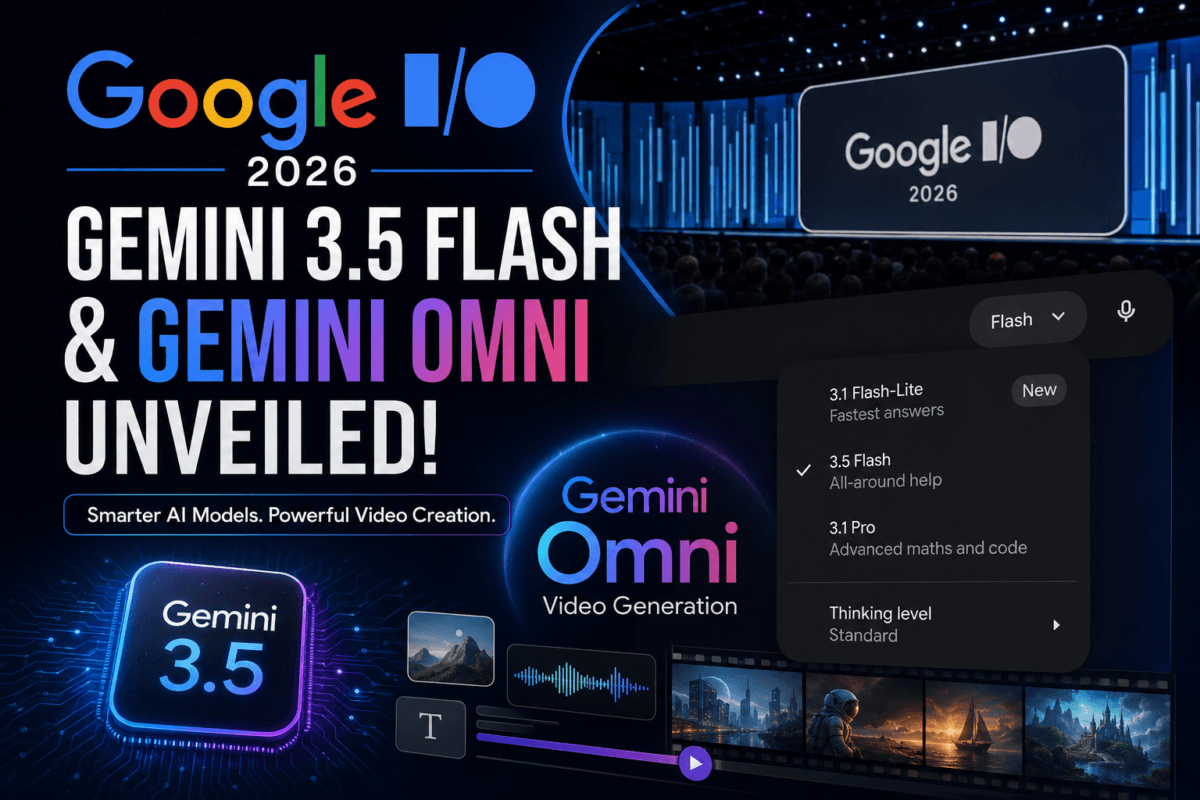
Google unveiled Gemini 3.5 Flash and Gemini Omni during Google I/O 2026, introducing faster AI agents, advanced coding capabilities, and next-generation multimodal video generation tools.
Google officially kicked off Google I/O 2026 on Wednesday, and as expected, Artificial Intelligence completely dominated the event. From smarter AI assistants to advanced video generation tools, the company showcased how deeply AI is now becoming part of the Google ecosystem.
The keynote started with Sundar Pichai talking about Google’s growing AI ambitions and introducing several new features for users and developers. While many announcements focused on productivity and Search improvements, the biggest moment of the event came when Demis Hassabis introduced two major AI upgrades — the new Gemini 3.5 lineup and Google’s first fully multimodal video-generation model called Gemini Omni.
Also Read : Google Rolls Out Gemini Usage Dashboard With New Weekly Limits for AI Users
Gemini 3.5 Flash Is Faster, Smarter, and Built for AI Agents
Google says the new Gemini 3.5 Flash model is designed to handle advanced tasks much more efficiently than previous Gemini versions. According to the company, the model delivers significantly faster performance while also reducing operational costs for developers.
The company is already rolling out Gemini 3.5 Flash globally through the Gemini app and AI Mode inside Google Search. Developers can also access it through Google AI Studio, Android Studio, Gemini API, and the company’s Antigravity platform.
Interestingly, Google is heavily promoting the model’s “agentic” abilities this time. Instead of acting like a simple chatbot that only responds to prompts, Gemini 3.5 Flash is built to complete complex multi-step tasks more independently.
During the presentation, Google claimed the model can outperform several competing AI systems, including:
- Claude Sonnet 4.6
- Claude Opus 4.7
- GPT-5.5
in areas such as coding, reasoning, multimodal understanding, and long-context processing.
But honestly, the benchmark numbers were not the most interesting part of the announcement.
What really stood out was Google’s live demonstration showing how Gemini 3.5 Flash could coordinate multiple AI agents simultaneously. The company revealed that using its Antigravity platform, the model managed to deploy 93 AI agents together to build a working operating system in just 12 hours.
Even more surprising was the cost. Google claimed the entire project required less than $1,000 in API expenses.
That demo gave a pretty clear hint about where AI development is heading next. Companies are no longer just building smarter chatbots — they are building AI systems capable of handling real workflows almost like digital teams.
Also Read : Google Unveils Gemini Spark at I/O 2026: A New AI Agent Workspace That Can Work for You
Gemini Omni Could Change AI Video Creation
The second major announcement from Google I/O 2026 was Gemini Omni Flash.
This is Google’s new multimodal AI system designed specifically for video generation and editing. Unlike traditional AI tools that mostly rely on text prompts, Gemini Omni can process multiple types of inputs together, including:
- Text
- Images
- Audio
- Video
This means users can give the AI a combination of media and instructions inside a single prompt to generate or edit videos conversationally.
For example, users can change a video background, replace objects, modify characters, or adjust scenes simply by describing the changes naturally. Google demonstrated several examples during the keynote, and the editing process looked much more interactive than traditional video editing software.
The company says Gemini Omni Flash is currently focused on video generation, but it’s clear Google sees this technology becoming much bigger in the future.
Check What is difference between Omni & Invideo AI
Google Has Already Started Rolling It Out
Google confirmed that Gemini Omni Flash is rolling out globally for subscribers of Google AI Plus, Pro, and Ultra plans through the Gemini app and Google Flow.
Interestingly, Google is also bringing some of these AI video tools to creators for free through:
- YouTube Shorts
- YouTube Create
starting this week.
That could become a huge advantage for content creators, especially short-form video creators who want faster editing tools powered by AI.
Also Read : When AI Gets Technical Advice Wrong: A LiteSpeed Cache Purge All Case Study
Gemini Interface Already Showing New 3.5 Flash Model
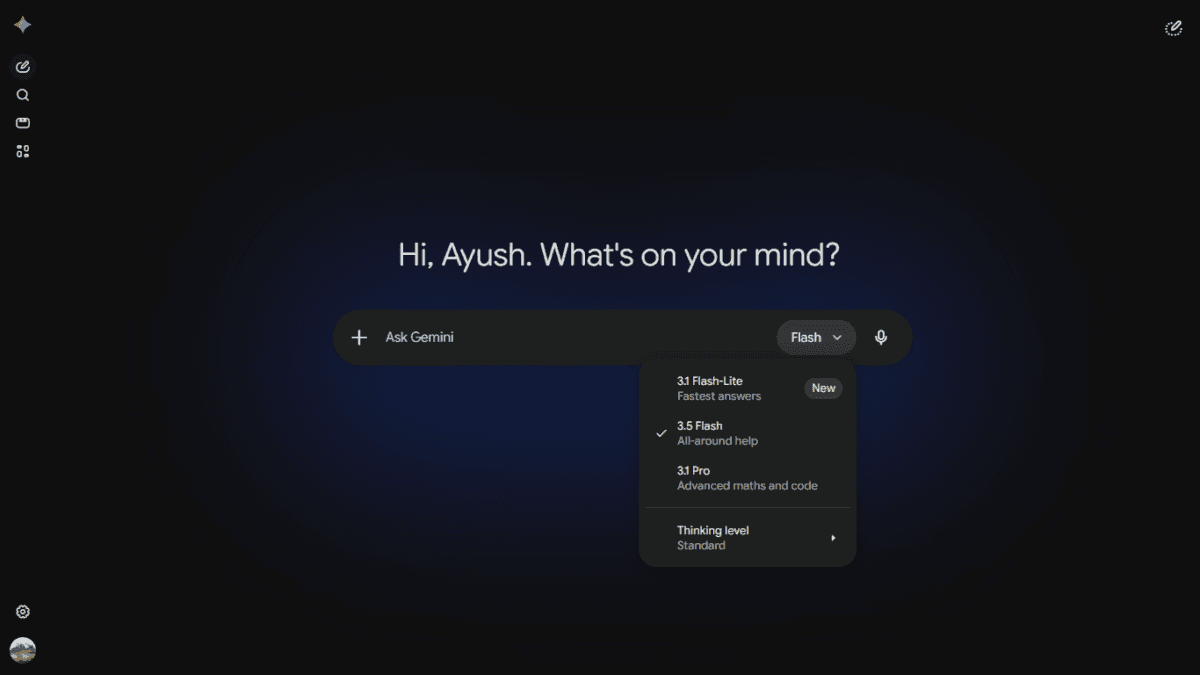
Google has also started updating the Gemini interface for users globally. The latest version now includes the new Gemini 3.5 Flash model alongside older options like 3.1 Pro and Flash-Lite.
The updated interface suggests Google is moving quickly to integrate its latest AI models directly into consumer products instead of limiting them to developer testing.
Is Gemini 3.5 Flash Free to Use?
For most regular users, Gemini 3.5 Flash can currently be used for free inside the standard Gemini app for everyday tasks like asking questions, planning, brainstorming, and basic writing.
Users only need a paid Google AI subscription if they want access to advanced Pro models, deeper coding tools, premium AI features, or additional Google cloud storage benefits.
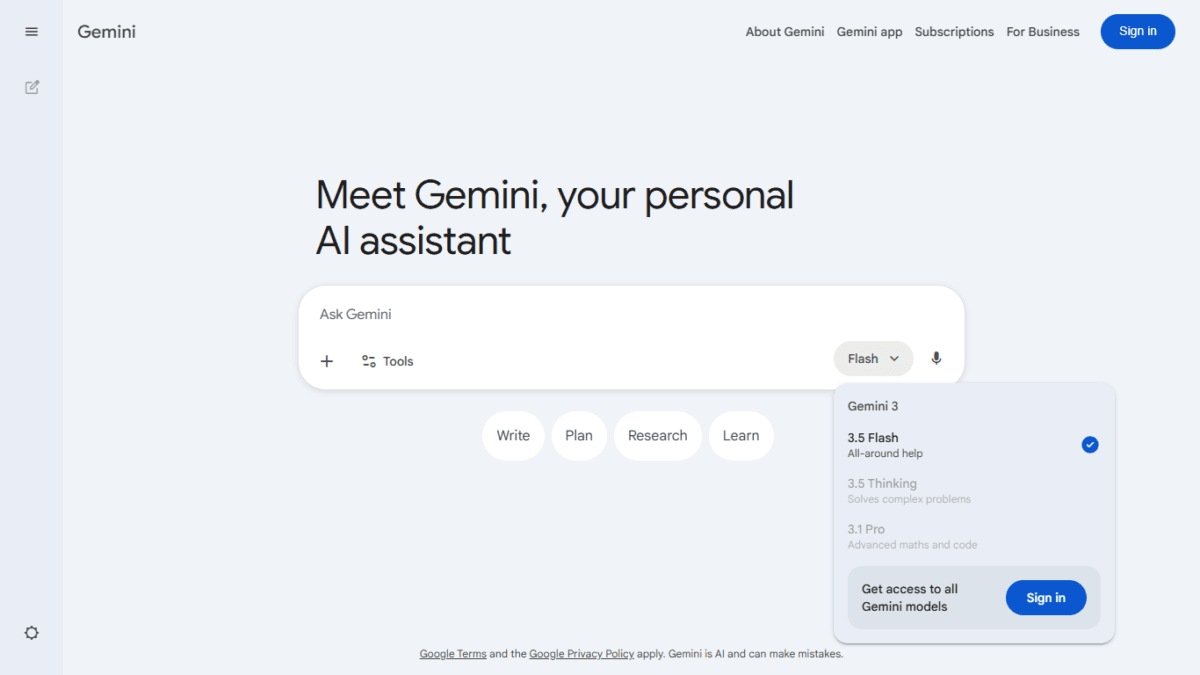
Interestingly, I also noticed that the Gemini 3.5 Flash option appears even in incognito mode without signing in, suggesting Google may already be expanding visibility of the model more broadly.
Since I am already using Gemini through Jio’s 18-month Gemini subscription offer, the updated Gemini interface on my account now shows Gemini 3.5 Flash alongside older models like 3.1 Pro and Flash-Lite.
Also Read : The Ultimate AI Showdown: ChatGPT 5.5 (Go) vs. Gemini 3.5 Flash (Pro) vs. Claude Sonnet 4.6 (Free)
Final Thoughts
This year’s Google I/O felt less like a traditional developer conference and more like a preview of Google’s long-term AI strategy.
While OpenAI and Anthropic continue pushing advanced AI models, Google appears focused on combining speed, multimodal capabilities, and real-world productivity into one ecosystem.
Gemini 3.5 Flash shows Google wants AI agents to handle more complicated tasks independently, while Gemini Omni hints at a future where creating and editing videos could become as simple as having a conversation with AI.
And judging by the pace of announcements at Google I/O 2026, the AI competition is only getting more intense from here.
Disclaimer: The information in this article is based on official announcements, company statements, and publicly available reports. We have rewritten and adapted the content for clarity, accuracy, and reader experience. All trademarks, brand names, and images belong to their respective owners.

Ayush Singhal is the founder and chief editor of TechMitra.in — a tech hub dedicated to simplifying gadgets, AI tools, and smart innovations for everyday users. With over 15 years of business experience, a Bachelor of Computer Applications (BCA) degree, and 5 years of hands-on experience running an electronics retail shop, Ayush brings real-world gadget knowledge and a genuine passion for emerging technology.
At TechMitra, he covers everything from AI breakthroughs and gadget reviews to app guides, mobile tips, and digital how-tos. His goal is simple — to make tech easy, useful, and enjoyable for everyone. When he’s not testing the latest devices or exploring AI trends, Ayush spends his time crafting tutorials that help readers make smarter digital choices.
📍 Based in Lucknow, India
💡 Focus Areas: Tech News • AI Tools • Gadgets • Digital How-Tos
📧 Contact: Get in touch →
🔗 Full Bio: https://techmitra.in/about-us/