

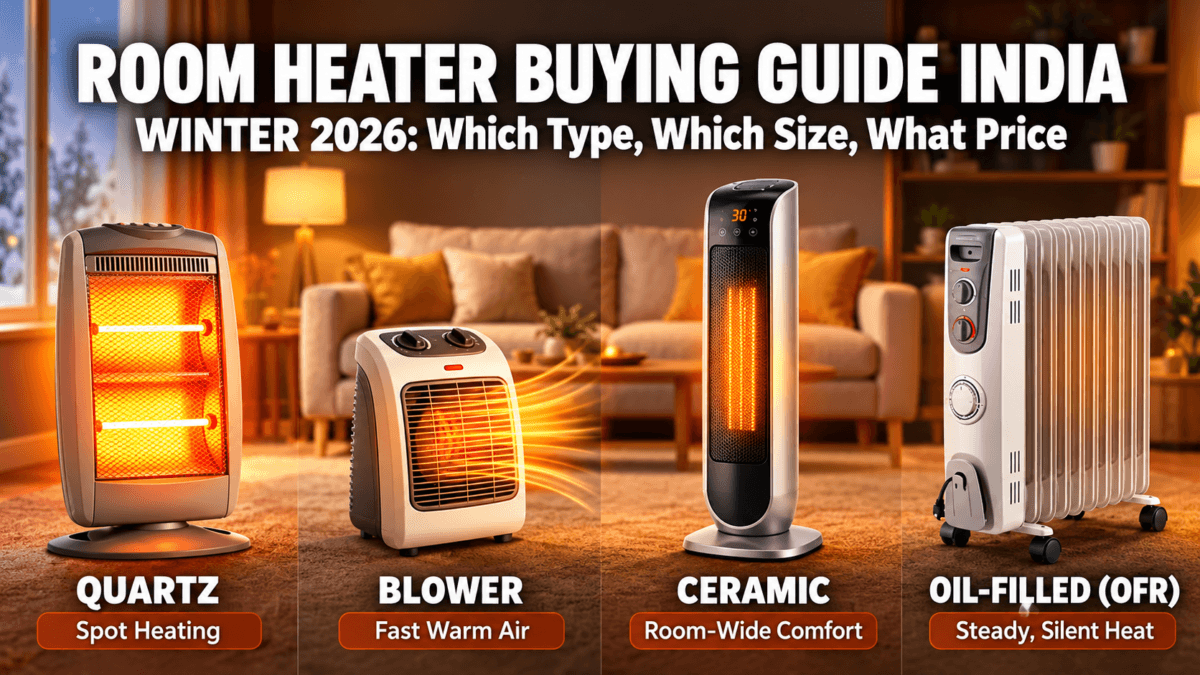
Updated 21 October 2026. Winter heater searches are starting again, and the question I hear most is still the same one I heard at my counter: which heater should I buy for my room, and what will it do to my electricity bill?
I ran an electronics retail shop from 2014 to 2019, and I sold hundreds of heaters in that time. This room heater buying guide India is built on what I learned there, plus a fresh check of the best-rated models from good brands on Amazon India this week. I’ll explain the four heater types in plain language, give you a rule for picking the right size, show what each one costs to run, and list the models I’d actually look at, with prices as of 21 October 2026.
Table of Contents
Quick answer: which room heater should I buy?
If you need warmth at a desk or beside the bed and the room is small, a quartz or halogen heater under ₹2,000 is enough. If you want fast warm air in a small to medium room, a blower (heat convector) at around ₹2,000 to ₹3,000 does the job, though you’ll hear the fan.
If the heater will run in a bedroom or a kids’ room and you want something safer and quieter than a bare element, a PTC ceramic heater is the better choice at ₹3,000 to ₹5,500. If you want steady, silent heat for a large room or for overnight use, buy an oil-filled radiator (OFR) at ₹10,000 to ₹15,000, and buy the right size, which I explain below.
Also Read 8 Best Water Heaters in India (2026): Buying Guide for Winter 5 storage and 3 instant geysers, with prices, ratings, warranty and installation details.
Do you need a room heater in India?
It depends on where you live. In north India and the hill regions, December and January nights get cold enough that a heater makes a real difference, especially in bedrooms and for elderly family members. In much of the south and along the coast, most people never need one. If you only get a few cold weeks a year, a cheap quartz or blower heater is usually enough, and an OFR is worth the money only if you will use it for hours every night.
How to choose a heater for your home
Four things decide the right heater: room size, how many hours you will run it, who will be in the room, and what your wiring can handle.
For room size, the one rule I’m certain of from my shop days is that fin count matters. A 9-fin OFR is not enough for a master bedroom of about 14 by 14 feet. For a standard Indian master bedroom you should buy an 11-fin or 13-fin model. Blower and quartz heaters are different: they warm what is in front of them, so they suit small rooms and personal use rather than heating a whole large room.
For hours of use, an OFR is built for long sessions because it warms up slowly and keeps giving heat. A quartz heater is built for short bursts, because it heats the moment you switch it on.
For who is in the room, think about children, elderly people and pets. Heaters with a tip-over switch and overheat protection matter most here, and PTC and oil-filled models have safety behaviour that a bare quartz rod does not.
For wiring, check the power draw. A 2,000-watt heater pulls about 9 amps and a 2,900-watt OFR pulls about 12.5 amps. Plug these into a proper wall socket, not a thin extension board, and don’t run another heavy appliance on the same line.
The four types of room heater, explained
Quartz and halogen heaters
These use glowing rods and an angled reflector to throw radiant heat in one direction. They are the cheapest heaters you can buy and they heat you the second you switch them on, which is why they work well for a study table or a spot beside the bed. The trade-off is that they warm the person in front of them and not the whole room, and the heat stops the moment you move out of its path. Because the rods glow, keep them away from curtains and bedding.
Blower heaters (heat convectors)
A heating coil with a fan pushes warm air around a small room quickly. They are cheap and light, and most have two or three heat settings and a thermostat. The downsides are fan noise and the fact that they draw 1,800 to 2,000 watts when running at full power, so they cost more to run than quartz heaters.
PTC ceramic heaters
PTC stands for Positive Temperature Coefficient. The heating element is a ceramic material whose electrical resistance rises as it heats up. When it is cold it draws a lot of current and heats fast, and as it approaches working temperature its resistance climbs, the current falls, and it settles at a steady temperature. That self-limiting behaviour is why PTC heaters are considered safer than a plain coil, and why they don’t glow. In India, “ceramic heater” almost always means a PTC heater with a fan.
One point to be clear about: PTC makes a heater safer and quieter, not cheaper to run. A heater gives out roughly as much heat as the electricity it draws, so a 1,500-watt PTC heater costs about the same per hour as any other 1,500-watt heater. You are paying for the safety behaviour and the design, not for extra heat.
Oil-filled radiators (OFR)
An OFR heats sealed thermal oil inside metal fins, and the fins warm the room. There is no glowing element, no fan and no noise, and the heat keeps coming for a while after the thermostat cuts power. They are slow to start, which is why many newer models, such as the three below, add a small PTC fan heater (typically 400 watts) for quick warmth while the oil heats up. They cost the most, but they are the best fit for bedrooms and large rooms that stay occupied for hours.
I want to be careful about two things you will see in many online guides. Electric heaters of any type do not burn oxygen, so that claim should not decide your purchase. And every electric heater lowers the relative humidity of a room as it warms the air. What an OFR avoids is the direct hot airflow, the glow and the fan noise, which is a large part of why it feels more comfortable.
What does each heater cost to run?
The table below shows the cost per hour at full power, assuming ₹8 per unit. Your own tariff will differ, so check your last bill and adjust.
| Heater | Power at full setting | Cost per hour at full power |
|---|---|---|
| Quartz (400W / 800W) | 800 W | about ₹6.40 |
| 3-rod halogen | 1,200 W | about ₹9.60 |
| PTC ceramic | 1,200 to 2,000 W | about ₹9.60 to ₹16 |
| Blower / convector | 1,800 to 2,000 W | about ₹14.40 to ₹16 |
| Oil-filled radiator | 2,900 W | about ₹23.20 |
Those are maximum figures. Any heater with a working thermostat will switch off once the room reaches the set temperature, so the real cost depends on how big the room is, how cold it is and how well the room holds heat. An OFR looks expensive at full power, but it spends much of the night cycling on and off once the room is warm. I have not measured this myself in a controlled test, so treat the thermostat saving as real but not precisely quantified.
Best oil-filled radiator (OFR) heaters on Amazon India
Havells 13-fin OFR, 2,900 W (₹14,499)

This is the most powerful of the three and the most complete. It gives 1,000 / 1,500 / 2,500 W oil heating plus a 400 W PTC fan heater, with thermostat control, tip-over protection, overheat shut-off and an ISI-approved safety mark. The control panel is inclined so it’s easy to reach, and the wheels retract so it fits back in its carton. The Amazon listing advertises a 10-year warranty, so open the product page and read exactly what that covers before you rely on it. The same model is also sold in 9-fin (₹11,338) and 11-fin (₹12,800), but for a master bedroom I’d stay with 11 or 13 fins, as above.
Philips 11-fin OFR, 2,900 W (₹15,200)

Philips uses M-shaped fins, and the company claims about 30 percent faster heating than straight fins of the same size, which is a manufacturer figure I haven’t tested. It has two knobs, one for thermostat and one for heat mode, five heat settings from 400 W to 2,900 W, a PTC fan heater for quick warmth, a tilt cut-off past 40 degrees and a built-in cord winder. The listing says it must be plugged into a 16-amp socket, the same type used for geysers and ACs, so check that you have one where the heater will sit. Warranty is two years.
Sujata 13-fin OFR, 2,900 W (₹11,654)

This is the budget way into a 13-fin OFR. It has three heat settings, a PTC fan heater, a tilt switch, overheat protection, ISI approval, a 2-metre cord and a two-year warranty. The 11-fin version is cheaper at ₹10,593. Note that the Amazon listing makes claims about oxygen and humidity that I would not repeat, so judge it on the fin count, power and safety features.
Best blower (heat convector) heaters on Amazon India
Usha 423N, 2,000 W (₹2,679)

Three settings at 665, 1,330 and 2,000 W, two fan speeds, overheat protection, a thermal cut-out, a cool-touch handle and a night-light indicator. Usha rates it for spot heating up to about 150 sq ft, which is a fair description. It has a one-year warranty and ISI mark
Bajaj Majesty RX 8, 2,000 W (₹2,799)

Two heat settings (1,000 W and 2,000 W), an adjustable thermostat, automatic thermal shut-off and an adjustable height setting, with a cool-touch handle, ISI approval and a two-year warranty. The thermostat is the main reason to pick it over the simpler models.
Usha HC 443 C, 1,800 W (₹2,165)
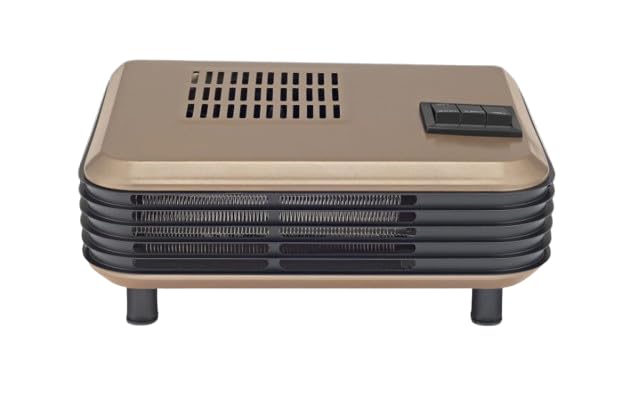
The cheapest of the three, with two heating positions, turbo airflow, a thermal cut-out and an aluminium front grill. It is a basic, no-frills model for a small room, and the listing doesn’t state a warranty, so check that on the product page.
Best quartz and halogen heaters on Amazon India
Sujata SRH63 2-rod quartz heater, 400 W / 800 W (₹1,196)

The lowest-priced heater here. Two quartz rods, two settings, a tip-over switch, a metal front grill, a cool-touch body, a 2-metre cord and a two-year warranty. A good first heater for a small bedroom or a desk.
Havells Bero 2-rod quartz heater, 800 W (₹1,799)

Two quartz tubes, 400 W and 800 W settings, a tip-over switch, a front grill and a carry handle, with a two-year warranty. It costs more than the Sujata for a similar specification, so you are paying for the brand and service network.
Havells Inclino 3-rod halogen heater, 1,200 W (₹3,152)

Three halogen rods with 400, 800 and 1,200 W settings, wide oscillation to spread the heat, tip-over protection and a cool-touch handle. It is the pick if you want a bit more heat and coverage than a two-rod model.
Best PTC ceramic heaters on Amazon India
Havells Calmy PTC heater, 1,200 W (₹3,990)

Dual heat settings at 600 W and 1,200 W, oscillation, an adjustable thermostat, overheat protection, a tip-over switch and an integrated handle. The best-known brand of the three, and the lowest-power option, which keeps running cost down.
Usha 1212 PTC fan heater, 1,500 W (₹3,999)

An adjustable thermostat, two-stage overheat protection, two heating elements so you can pick a lower setting, a fire-retardant ABS body, a cord winder and an ISI mark. Usha describes it as a spot-heating model for small spaces.
FASTRON PTC space heater (₹5,399)
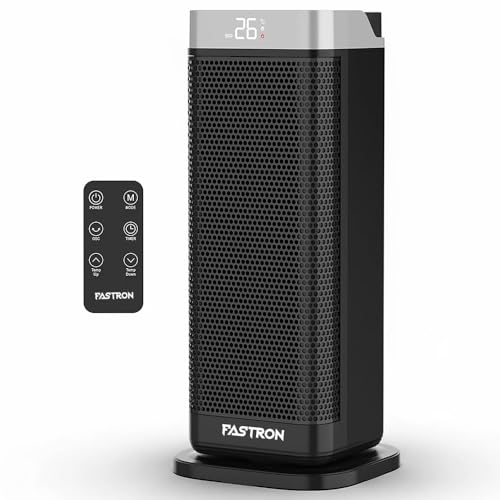
The most feature-rich of the three, with a remote, touch controls, a 12-hour timer, 70-degree oscillation, overheat protection and a tip-over sensor. It is also the least established brand here, so weigh service support before you buy.
Comparison table: all 12 heaters at a glance
Swipe left and right to see the full table →
| Model | Type | Power | Price (21 Oct 2026) | Best for | Buy |
|---|---|---|---|---|---|
| Havells 13-Fin OFR | Oil-filled (OFR) | 2,900 W | ₹14,499 | Large rooms, overnight use | Buy Now |
| Philips 11-Fin OFR | Oil-filled (OFR) | 2,900 W | ₹15,200 | Medium to large rooms, quick warm-up | Buy Now |
| Sujata 13-Fin OFR | Oil-filled (OFR) | 2,900 W | ₹11,654 | Budget 13-fin option | Buy Now |
| Usha 423N | Blower | 2,000 W | ₹2,679 | Small rooms up to about 150 sq ft | Buy Now |
| Bajaj Majesty RX 8 | Blower | 2,000 W | ₹2,799 | Adjustable thermostat | Buy Now |
| Usha HC 443 C | Blower | 1,800 W | ₹2,165 | Small room, lowest blower price | Buy Now |
| Sujata SRH63 2-Rod | Quartz | 800 W | ₹1,196 | Desk or small bedroom, lowest price | Buy Now |
| Havells Bero 2-Rod | Quartz | 800 W | ₹1,799 | Brand-backed quartz heater | Buy Now |
| Havells Inclino 3-Rod | Halogen | 1,200 W | ₹3,152 | Wider coverage with oscillation | Buy Now |
| Havells Calmy PTC | PTC ceramic | 1,200 W | ₹3,990 | Bedrooms, lower power use | Buy Now |
| Usha 1212 PTC | PTC ceramic | 1,500 W | ₹3,999 | Small spaces, ISI-marked | Buy Now |
| FASTRON PTC | PTC ceramic | 1,500 to 2,000 W | ₹5,399 | Remote and 12-hour timer | Buy Now |
Prices checked on 21 October 2026 and may change, especially during Amazon sales. TechMitra.in is an Amazon Associate and may earn a commission from qualifying purchases at no extra cost to you.
Safety tips for using a room heater
Give any heater at least three feet of clear space and never drape clothes or bedding over it. Plug high-power heaters straight into a wall socket and avoid thin extension boards: a 2,000 W heater draws about 9 amps, and a 2,900 W OFR draws about 12.5 amps, which is why Philips specifies a 16-amp socket.
Don’t run a heater alongside an AC, geyser or iron on the same line. Choose models with a tip-over switch and overheat protection, prefer ISI-marked products, keep heaters away from water and bathrooms, and switch off any bare-element heater when you sleep. If a plug or socket feels hot after an hour of use, stop using it and have the wiring checked.
Why a washing machine matters in winter too
Winter is when a fully automatic washing machine saves the most effort. Washing blankets, quilts, sweaters and jackets by hand in cold water is hard work, and bulky items can take days to dry when the sun is weak. A machine with a good spin speed removes much more water than hand wringing, so clothes dry noticeably faster on the line or indoors.
Models with a built-in water heater can wash with warm water, which helps with heavy winter fabrics and baby clothes, and a larger drum capacity makes it easier to wash a quilt in one go.
Keep the power load in mind, though. A washing machine with a heating function draws a lot of power while it heats the water, so don’t run it on the same line as a room heater, geyser or AC, for the same reason I mentioned in the safety tips. If you are choosing a machine mainly for winter, our guide to the best fully automatic washing machines in India shows the models I looked at.
Also Read Best Fully Automatic Washing Machines in India: Buying Guide A buying guide to help you choose the right fully automatic washing machine.FAQs
Which room heater should I buy?
Match it to the room: quartz for a desk or small corner, blower for quick heat in a small room, PTC for bedrooms and kids’ rooms, OFR for large rooms and long hours.
Do OFRs use less electricity?
Not by themselves. A heater gives out about as much heat as the power it draws. An OFR can cost less over a night only because its thermostat cuts power once the room is warm, and any heater with a working thermostat does the same.
Which heater is best for elderly people and babies?
An oil-filled radiator or a PTC heater, because neither has a glowing element and both have tilt and overheat protection. Keep any heater out of reach of small children.
How many fins do I need?
For a standard master bedroom of about 14 by 14 feet, I recommend 11 or 13 fins. A 9-fin model is too small for that room.
Is a PTC heater cheaper to run?
No. PTC is a safety technology. A 1,500-watt PTC heater costs the same per hour as any 1,500-watt heater.
TechMitra.in participates in the Amazon Associates Affiliate Program. We may earn a small commission when you buy through links in this article, at no extra cost to you.

Ayush Singhal is the founder and chief editor of TechMitra.in — a tech hub dedicated to simplifying gadgets, AI tools, and smart innovations for everyday users. With over 15 years of business experience, a Bachelor of Computer Applications (BCA) degree, and 5 years of hands-on experience running an electronics retail shop, Ayush brings real-world gadget knowledge and a genuine passion for emerging technology.
At TechMitra, he covers everything from AI breakthroughs and gadget reviews to app guides, mobile tips, and digital how-tos. His goal is simple — to make tech easy, useful, and enjoyable for everyone. When he’s not testing the latest devices or exploring AI trends, Ayush spends his time crafting tutorials that help readers make smarter digital choices.
📍 Based in Lucknow, India
💡 Focus Areas: Tech News • AI Tools • Gadgets • Digital How-Tos
📧 Contact: Get in touch →
🔗 Full Bio: https://techmitra.in/about-us/