

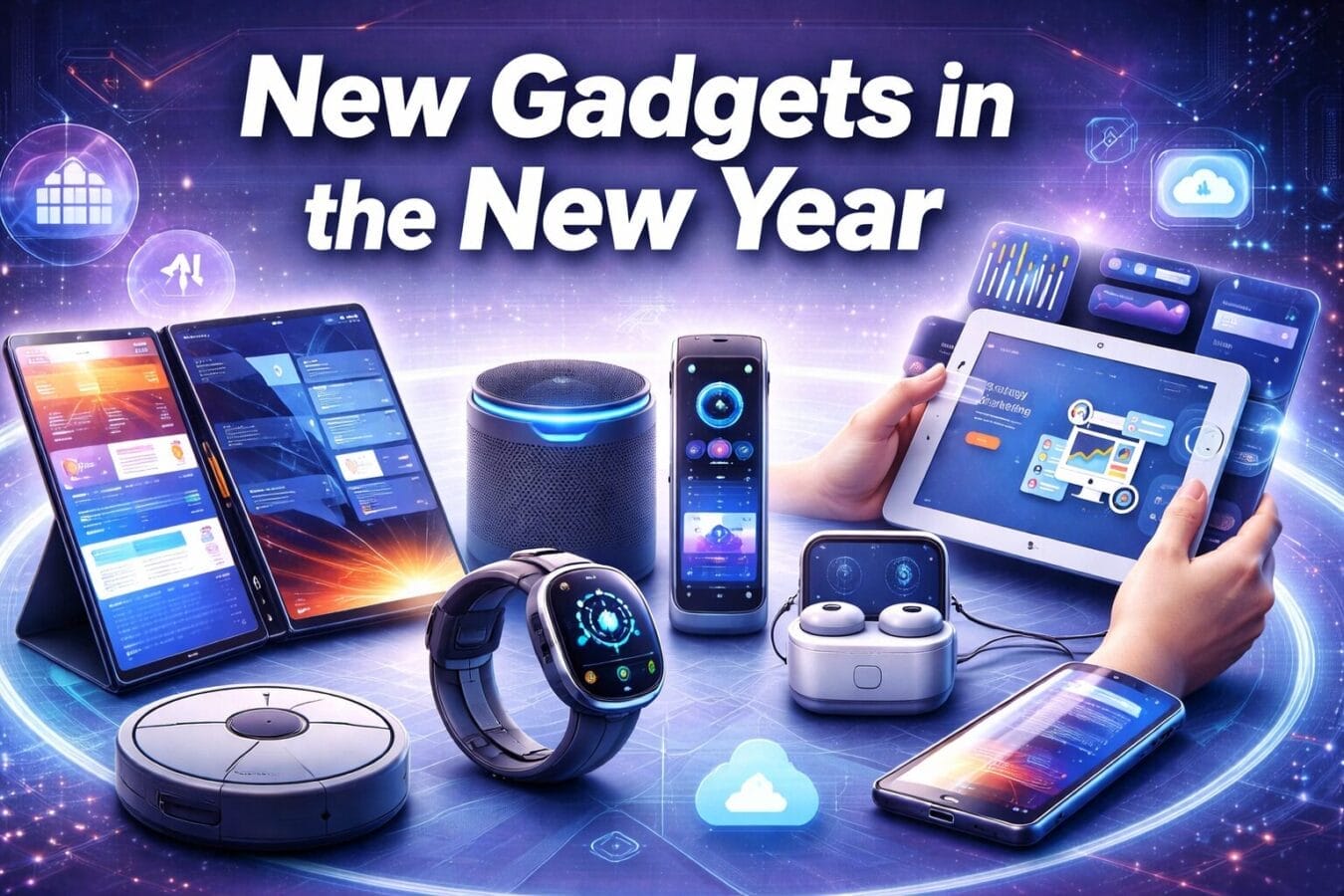
Every new year arrives with hope, fresh goals, and—most importantly for tech enthusiasts—a new wave of gadgets that promise to reshape everyday life. From smartphones that fold and expand to home appliances that think for themselves, the coming year is set to be a turning point where technology becomes less about novelty and more about real-world usefulness.
Unlike earlier years, where innovation often focused on flashy features, the new generation of gadgets is designed to solve practical problems. Artificial Intelligence (AI), automation, cloud connectivity, and smarter hardware are coming together to create devices that adapt to users rather than forcing users to adapt to technology.
Let’s explore how new Technology 2026 gadgets in the new year will redefine smartphones, homes, health, work, and digital security.
If you want to optimize your daily workflow, investing in the right tools is key. You can check out this list of [cool tech gadgets for daily use] to see what’s currently worth buying
Table of Contents
Foldable Smartphones: From Experiment to Everyday Device
Foldable smartphones were once seen as experimental luxury gadgets, but that perception is rapidly changing. In the new year, foldables are expected to become lighter, stronger, and more affordable, making them accessible to a much wider audience.
Manufacturers have worked extensively on improving:
Hinge durability
Foldable glass strength
Crease visibility
Software optimization for multitasking
The biggest change, however, is usability. New foldable phones are designed for people who want the convenience of a smartphone combined with the productivity of a tablet. Features like split-screen multitasking, floating windows, and app continuity are now smoother and more reliable.
As prices gradually come down, foldable smartphones are likely to move from a niche category to a mainstream choice—especially for professionals, content creators, and multitaskers.
Independent display testing shows rapid improvements in foldable smartphones market.
Rollable and Expandable Displays: The Next Design Revolution
If foldables are today’s innovation, rollable displays represent the future. These screens can expand when needed and retract when not, offering flexibility without bulk.
In the new year, rollable display technology is expected to appear in:
Smartphones that expand into mini-tablets
Laptops with extendable vertical screens
Portable monitors for professionals and gamers
The biggest advantage of rollable displays is adaptability. Users get a compact device for daily use and a larger screen for work, gaming, or entertainment—without carrying multiple devices.
While this technology will initially remain premium, it signals a major shift in how devices are designed and used.
AI-Powered Gadgets: Intelligence Moves to the Core
Artificial Intelligence is no longer limited to voice assistants or photo filters. In the new year, AI will become the central brain of gadgets, silently improving performance, efficiency, and user experience.
AI integration will be seen across devices, including:
Smartphones
Laptops and tablets
Smart TVs
Home appliances
Wearables
Key AI-driven features include:
Smart call screening and message summaries
Real-time language translation
Adaptive battery optimization
Personalized content recommendations
AI-enhanced photography and videography
Instead of reacting to commands, gadgets will proactively assist users—suggesting actions, automating tasks, and learning usage patterns over time.
Smartphones Get Smarter, Not Just Faster
Smartphone innovation in the new year is less about raw power and more about intelligent performance. While faster processors and better cameras remain important, software-led improvements are taking center stage.
New smartphones will focus on:
AI-assisted low-light photography
Real-time video enhancement
Smart storage management
On-device AI processing for privacy
Battery efficiency will also improve significantly. AI-powered battery management systems will analyze daily usage habits and adjust charging patterns to extend battery health and lifespan.
The result is phones that feel faster, last longer, and work more intuitively—without requiring users to tweak settings manually.
Recent smartphone launches indicate a strong shift toward AI-driven features
Smart Home Gadgets Become Truly Useful
Smart homes are evolving from novelty setups into practical living ecosystems. In the new year, smart home gadgets will emphasize convenience, energy efficiency, and automation rather than gimmicks.
Upcoming trends include:
AI-controlled air conditioners that adjust based on room occupancy
Smart refrigerators that optimize cooling and track usage
Intelligent air purifiers that respond to pollution levels
Lighting systems that adapt to time of day and user activity
These devices aim to reduce energy consumption while improving comfort. Instead of being controlled manually through apps, smart home gadgets will increasingly operate autonomously.
For Indian households, this shift is especially important as electricity costs rise and environmental awareness grows.
Health and Fitness Gadgets Go Beyond Basic Tracking
Wearable technology is undergoing a major transformation. Fitness bands and smartwatches in the new year will move beyond step counting and calorie tracking to provide meaningful health insights.
New features include:
More accurate heart rate and oxygen monitoring
Advanced sleep analysis with actionable feedback
Stress detection using multiple biometric signals
AI-powered health trend analysis
These devices aim to help users understand long-term patterns rather than just daily numbers. While they are not medical devices, they can encourage healthier habits and early awareness of potential issues.
Wearables are becoming everyday wellness companions rather than occasional fitness accessories.
Digital health tools and wearables are increasingly supporting wellness awareness
Laptops and Tablets Embrace Hybrid Work Needs
The way people work has permanently changed, and gadgets are evolving accordingly. Laptops and tablets in the new year will focus on:
Better battery life
Lighter designs
Improved AI-assisted productivity tools
AI features like document summarization, real-time transcription, and smart task organization will become standard in productivity devices. Tablets, in particular, are blurring the line between entertainment and work, with better keyboard accessories and desktop-style interfaces.
For students, freelancers, and remote workers, these improvements mean more flexibility without sacrificing performance.
Faster Charging and Smarter Battery Technology
One of the most noticeable improvements in new gadgets will be charging technology. Faster charging no longer means overheating or battery degradation.
Key advancements include:
High-speed charging with better heat control
AI-managed charging cycles
Longer battery lifespan
Smart charging systems will learn when users typically unplug their devices and adjust charging speed accordingly. This reduces stress on the battery and improves long-term reliability.
For users, this means less anxiety about battery health and fewer charging interruptions during the day.
Cloud Connectivity Meets Privacy Awareness
As gadgets become more connected, data security and privacy are becoming critical concerns. In the new year, companies are focusing on balancing cloud convenience with stronger privacy protections.
Major changes include:
Increased on-device data processing
Reduced reliance on constant cloud access
Clearer user controls for data sharing
AI models running directly on devices help protect sensitive information while maintaining performance. This shift is especially important as users become more aware of digital privacy risks.
Gaming Gadgets and Immersive Entertainment
Entertainment gadgets are also evolving. Gaming consoles, handheld gaming devices, and smart TVs are embracing:
AI-enhanced graphics
Faster load times
More immersive audio-visual experiences
Portable gaming devices are gaining popularity, offering console-level performance in compact designs. Meanwhile, smart TVs are becoming content hubs with built-in AI that recommends shows, optimizes picture quality, and enhances sound automatically.
Entertainment is becoming more personalized, immersive, and accessible.
Innovation With Purpose
The new year’s gadgets reflect a clear shift in the tech industry’s mindset. Instead of chasing headline-grabbing specs, companies are focusing on meaningful innovation—technology that blends seamlessly into everyday life.
AI is no longer a buzzword; it’s becoming an invisible assistant. Foldable and rollable designs are solving real usability challenges. Smart homes are saving energy, and wearables are promoting better health awareness.
The most exciting part? These changes are not limited to premium users. As technology matures, these innovations will gradually become affordable and widely available.
If this trend continues, the new year could mark the beginning of a more balanced tech era—where gadgets are powerful, yes, but also thoughtful, practical, and genuinely helpful.
Frequently Asked Questions (FAQs): New Technology 2026 in Gadgets in this New Year
1. What are the biggest new technology innovations in the new year?
The biggest gadget trends in the new year include foldable and rollable smartphones, AI-powered devices, smarter home appliances, advanced wearables for health tracking, faster charging technology, and improved data privacy features. The focus is shifting from flashy specs to practical, user-friendly innovation.
2. Will foldable smartphones become more affordable this year?
Yes, foldable smartphones are expected to become more affordable in the new year. As manufacturing improves and competition increases, prices are likely to drop, making foldable phones accessible to more users while also improving durability and performance.
3. How is AI changing new gadgets?
AI is becoming the core of modern gadgets. In the new year, AI will help devices learn user habits, optimize battery life, improve camera quality, summarize calls and messages, translate languages in real time, and automate daily tasks—making gadgets smarter and more personal.
4. What are rollable displays, and why are they important?
Rollable displays are flexible screens that can expand or retract as needed. They allow devices like smartphones and laptops to offer larger screens without increasing size permanently. This technology represents the next step after foldable screens and highlights the future of device design.
5. Are smart home gadgets really useful now?
Yes, smart home gadgets are becoming far more practical. In the new year, devices like smart ACs, air purifiers, lights, and refrigerators will focus on energy efficiency, automation, and real-world convenience rather than just app-based control.
6. How are health and fitness gadgets improving?
New health and fitness gadgets go beyond step counting. Wearables now offer advanced heart monitoring, sleep analysis, stress tracking, and AI-based health insights. These features help users understand long-term wellness trends and adopt healthier lifestyles.
7. Will battery life and charging improve in new gadgets?
Absolutely. Faster charging with better heat control and AI-managed battery systems will be common in new gadgets. These improvements help extend battery lifespan while reducing charging time and everyday battery anxiety.
8. Are new gadgets safer in terms of data privacy?
Yes, data privacy is becoming a major focus. Many new gadgets process data directly on the device instead of relying entirely on the cloud. This reduces privacy risks and gives users more control over their personal information.
9. Which gadgets will benefit students and remote workers the most?
Students and remote workers will benefit from AI-powered laptops, tablets with desktop-like features, long battery life devices, and smart productivity tools such as document summarization, transcription, and task automation.
10. Are these new gadget technologies only for premium users?
Initially, many new technologies launch in premium devices, but as they mature, they become affordable. Over time, features like AI tools, fast charging, and smart automation are expected to reach mid-range and budget gadgets as well.
Trending

Ayush Singhal is the founder and chief editor of TechMitra.in — a tech hub dedicated to simplifying gadgets, AI tools, and smart innovations for everyday users. With over 15 years of business experience, a Bachelor of Computer Applications (BCA) degree, and 5 years of hands-on experience running an electronics retail shop, Ayush brings real-world gadget knowledge and a genuine passion for emerging technology.
At TechMitra, he covers everything from AI breakthroughs and gadget reviews to app guides, mobile tips, and digital how-tos. His goal is simple — to make tech easy, useful, and enjoyable for everyone. When he’s not testing the latest devices or exploring AI trends, Ayush spends his time crafting tutorials that help readers make smarter digital choices.
📍 Based in Lucknow, India
💡 Focus Areas: Tech News • AI Tools • Gadgets • Digital How-Tos
📧 Contact: Get in touch →
🔗 Full Bio: https://techmitra.in/about-us/