

The AI image generation space just got its biggest shake-up of the year. Right after the headline-grabbing launch of Gemini 3 Pro, Google has quietly but confidently dropped another bombshell: Nano Banana Pro — also known internally as Gemini 3 Pro Image.
If last year’s Nano Banana (Gemini 2.5 Flash Image) model was all about speed and fun for everyday creators, the “Pro” variant is Google officially rolling up its sleeves and stepping into the professional arena. This model is engineered for serious creative workflows—think agencies, designers, filmmakers, developers, and businesses that need not just “good AI images,” but production-grade assets.
And this time, Google isn’t just competing… it’s rewriting the rulebook.
Table of Contents
A Pro-Grade Leap: Where Clarity Meets Absolute Control
Nano Banana Pro isn’t a mild upgrade—it’s a full jump to the next generation. Thanks to the advanced reasoning power of Gemini 3 Pro, this model directly tackles the biggest complaints professionals have had about AI image tools.
Let’s break down the upgrades that matter most.
1. Ultra-High Resolution Output (Finally, Real 4K)
Most generative models hit a ceiling with lower resolutions that limit their use in real-world production. But Nano Banana Pro breaks past that limitation, generating native 2K and 4K images right out of the box.
This is huge for:
Print media
Outdoor digital displays
E-commerce mockups
Professional product shoots
Illustrated storyboards
Film pre-viz assets
If you’ve been upscale-fixing AI images to make them usable, that era ends here.
2. Flawless, Human-Quality Text Rendering
One of the biggest pain points across AI models has been the notorious “AI text gibberish” in images. Posters, banners, book covers—everything needed post-editing.
Not anymore.
Nano Banana Pro generates sharp, accurate, stylized text directly inside the image. That means:
Poster designs
Packaging mockups
Social media creatives
Infographics
Diagrams
…all can be generated ready to use, without correcting letters afterward. This alone puts Google miles ahead of every major model today.
3. Unreal Consistency Across Characters & Scenes
For creators who need to keep a character, face, or product consistent across multiple frames, Nano Banana Pro delivers something unprecedented:
Maintain likeness of up to 5 people
Combine up to 14 reference images into one coherent scene
This opens up pro-level possibilities:
Brand campaigns
Cinematic storyboard sequences
Character design
Ad mockups
Multi-angle product renders
This is one of the closest glimpses yet of AI approaching true production standards.
4. Studio-Grade Creative Controls Through Simple Prompts
Nano Banana Pro offers settings you’d normally tweak in professional software, but through natural language prompts.
You can now control:
• Camera Angles
“Overhead,” “low-angle,” “35mm close-up,” “wide cinematic shot,” etc.
• Scene Lighting
For example:
“Soft diffused light from the left,”
“Harsh studio spotlight,”
“Golden hour sunlight.”
• Depth of Field & Focus
Want a creamy bokeh on the background? Or razor-sharp focus on a product? Just ask.
• Color Grading
From teal-orange cinema grade to pastel matte—you can define the look precisely.
This level of control pushes AI image generation closer to a virtual DSLR + Photoshop hybrid.
5. Real-World Grounding (The Google Superpower)
This is where Google flexes its true ecosystem advantage.
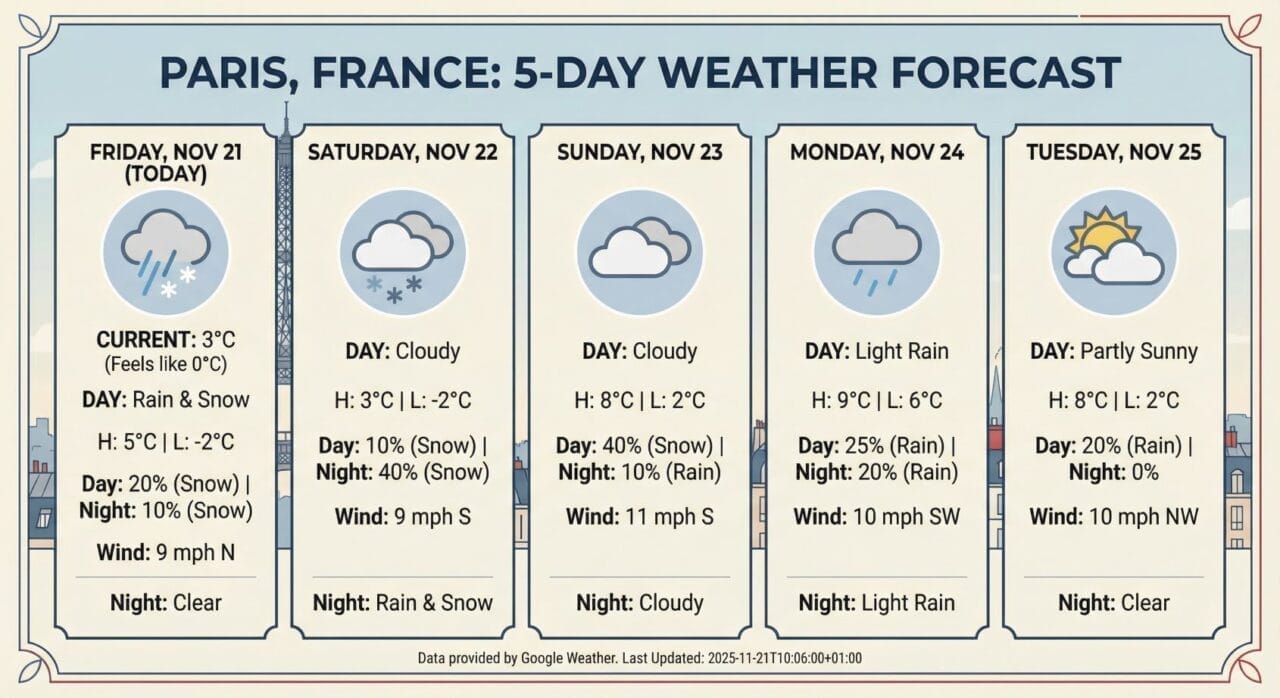
Nano Banana Pro can pull real, current data via Google Search and turn it into a visual instantly.
Example:
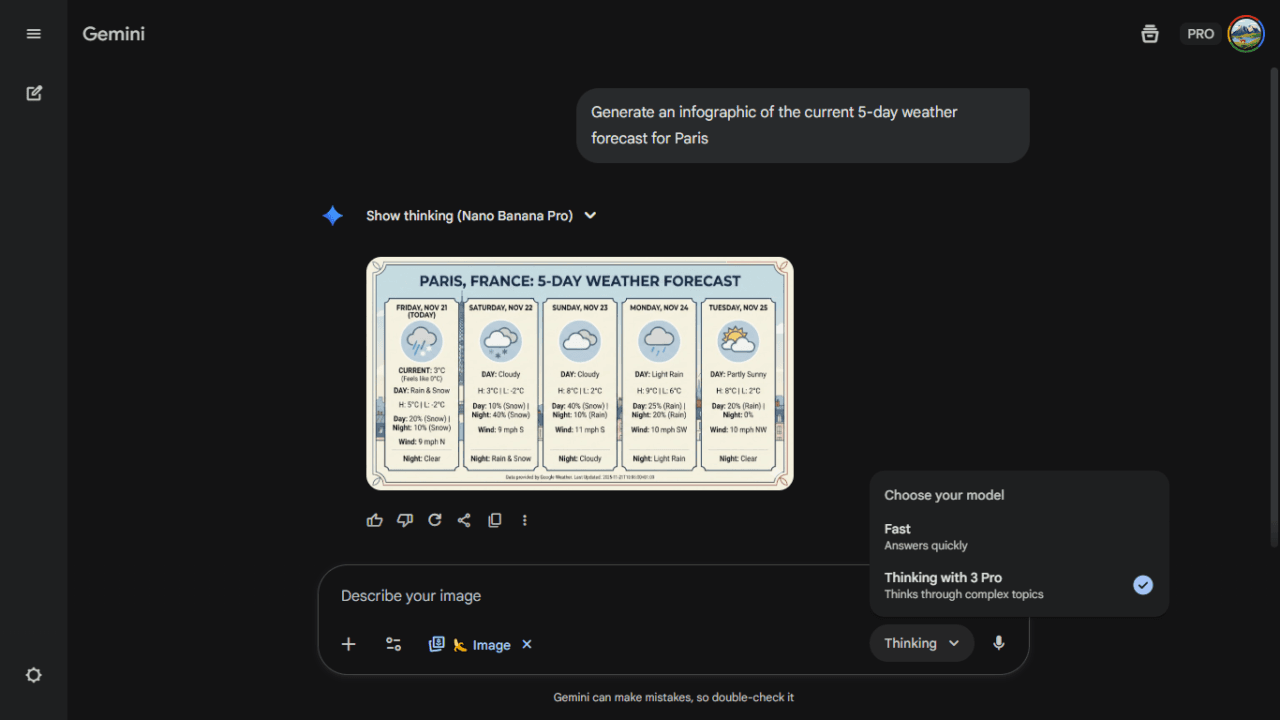
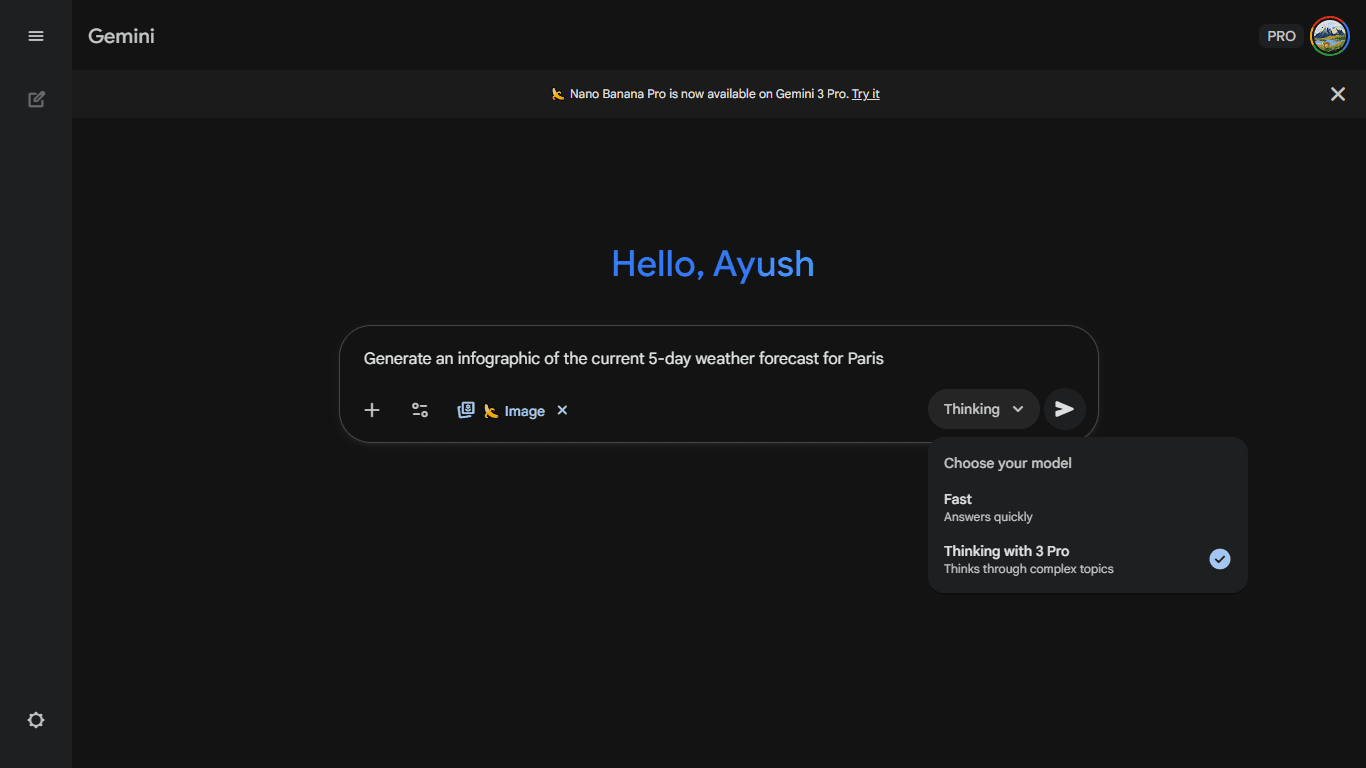
“Generate an infographic of the current 5-day weather forecast for Paris.”
It checks Google → processes data → creates a clean visual.
In real time.
This capability transforms AI image generation from creative to informational, opening the floodgates for editorial, educational, and news-based content.
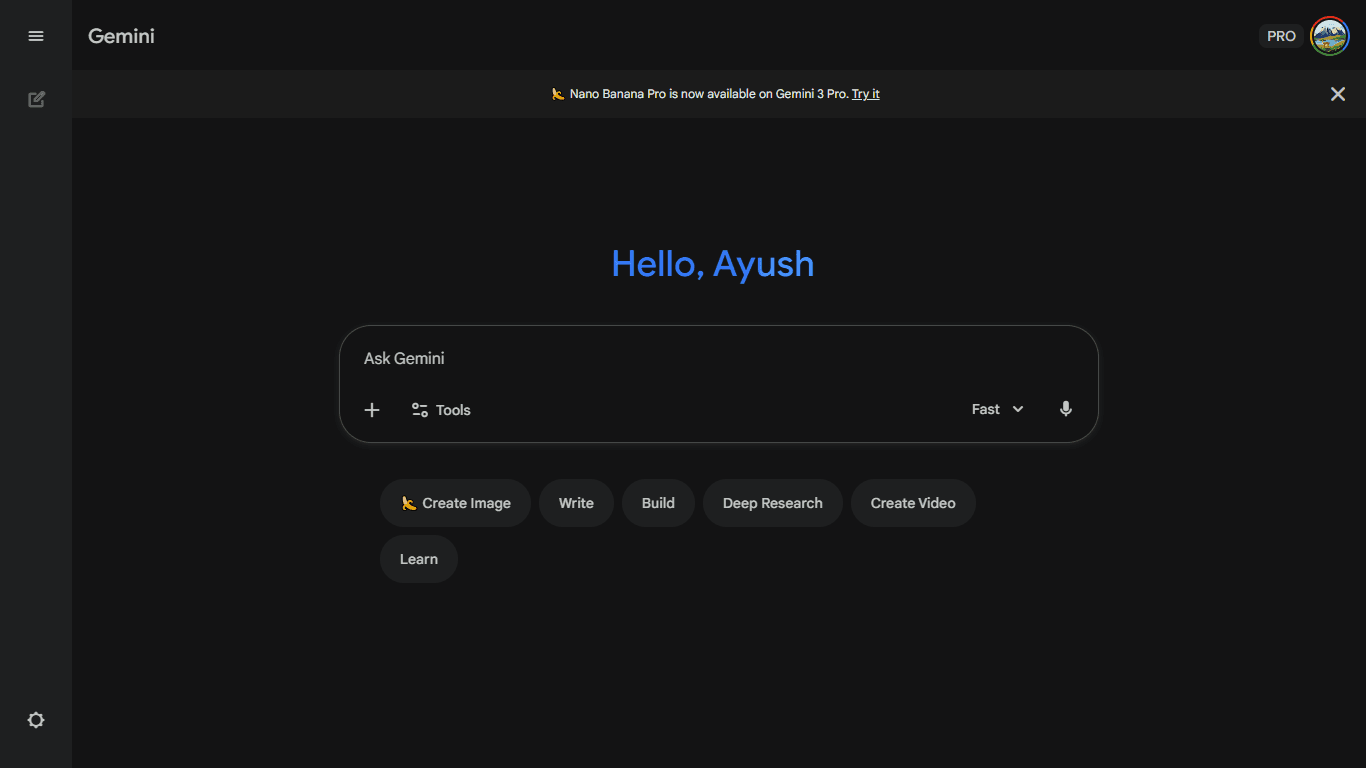
Image is Generated Using Nano Banana ( 3 Thinking Mode )
The AI Image Generation Wars Just Got Interesting
Midjourney continues to dominate the art-focused community, while DALL-E remains strong in prompt accuracy and style mimicry. But Nano Banana Pro’s combination of high resolution, perfect text, logical reasoning, and precise control puts Google on a completely different playing field.
Google isn’t trying to be Midjourney.
It’s aiming to become the industry standard for commercial AI imaging.
And the strategy is smart.
Deep Integration: Direct Access Inside Adobe Tools
Google confirmed that Nano Banana Pro is already integrated with:
Adobe Firefly
Adobe Photoshop
Creative Cloud tools (ongoing rollout)
This means professionals can generate using Google’s model within their existing workflow — no need to switch apps, export, or convert assets.
It’s clear Google wants Nano Banana Pro to become the CPU of the creative industry, not just another image generator.
Two Modes: Speed vs. Thinking Model
Nano Banana Pro comes with a tiered experience:
Nano Banana Ai (Original) – Speed Mode
Perfect for quick ideas, drafts, social posts, and casual creation.
Nano Banana Pro – Thinking Model
Uses advanced reasoning for:
Complex multi-step prompts
Factual or data-backed images
Professional compositions
Higher visual accuracy
Multi-image blending
Professionals finally get a mode optimized for thoughtful, deliberate creation, not just random generation.
Final Thoughts: Google Nano Banana Pro Isn’t Just an Upgrade — It’s a Creative Revolution
With Nano Banana Pro, Google isn’t simply joining the AI image race—it’s redefining what the finish line looks like.
From:
True 4K output
Accurate text
Multi-image consistency
Studio-level controls
Real-time fact grounding
Adobe integration
…this model is easily one of the most powerful AI image engines ever released.
It’s not just an image generator anymore.
It’s a visual reasoning partner—a tool that understands context, intention, and information at a professional level.
For designers, agencies, filmmakers, and brands, Nano Banana Pro could easily become the backbone of future creative workflows.
And for the rest of us?
This is a glimpse of how fast AI visuals are evolving—and just how close we’re getting to pixel-perfect generative design.
Disclaimer: The information in this article is based on details first reported by official sources and publicly available news, including Google News. We have adapted and rewritten the content for clarity, SEO optimization, and reader experience. All trademarks and images belong to their respective owners.
Trending

Ayush Singhal is the founder and chief editor of TechMitra.in — a tech hub dedicated to simplifying gadgets, AI tools, and smart innovations for everyday users. With over 15 years of business experience, a Bachelor of Computer Applications (BCA) degree, and 5 years of hands-on experience running an electronics retail shop, Ayush brings real-world gadget knowledge and a genuine passion for emerging technology.
At TechMitra, he covers everything from AI breakthroughs and gadget reviews to app guides, mobile tips, and digital how-tos. His goal is simple — to make tech easy, useful, and enjoyable for everyone. When he’s not testing the latest devices or exploring AI trends, Ayush spends his time crafting tutorials that help readers make smarter digital choices.
📍 Based in Lucknow, India
💡 Focus Areas: Tech News • AI Tools • Gadgets • Digital How-Tos
📧 Contact: Get in touch →
🔗 Full Bio: https://techmitra.in/about-us/