
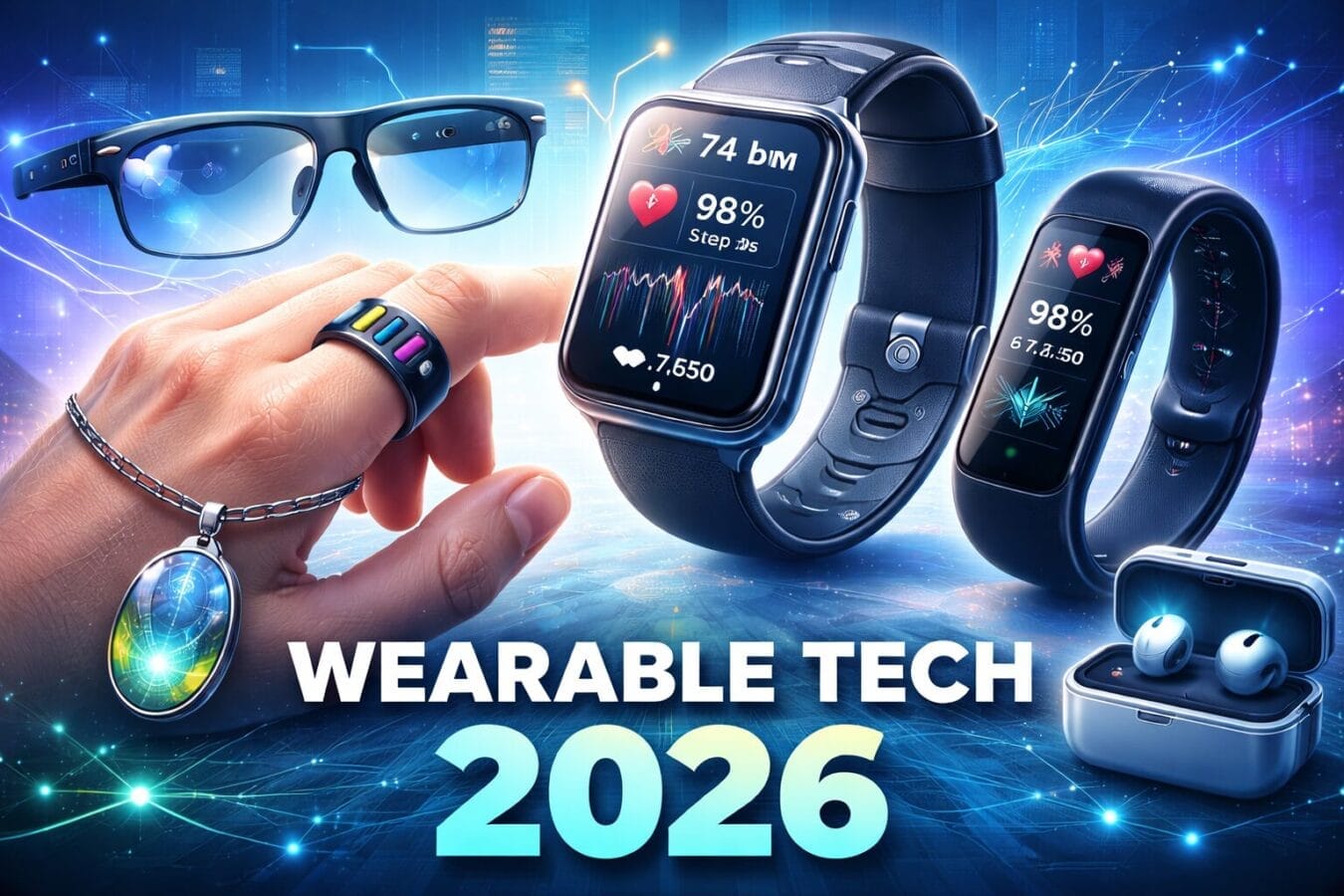
The rise of wearable technology is redefining how people interact with digital devices in 2026, shifting the focus from screens and notifications to health insights, comfort, and everyday intelligence. No longer limited to basic fitness bands or step counters, modern wearables now include smart rings, advanced fitness trackers, health-centric smartwatches, and intelligent accessories that quietly monitor the body while blending seamlessly into daily life. As awareness around preventive healthcare and personal wellness grows, wearable technology is emerging as one of the most impactful consumer tech categories of the decade.
The year 2026 marks a turning point where wearables move beyond screens and into subtle, sensor-driven experiences that blend seamlessly into daily life.
Table of Contents
Growth Of Wearable Technology In Healthcare is Faster Than Smartphones Once Did
Over the past decade, smartphones have reached a maturity point. Wearables, however, are now in their rapid growth phase. What makes this wave different is that users are no longer buying wearables for novelty—they are buying them for health insights, convenience, and lifestyle enhancement.
In 2026, Top wearable health devices tech is expanding across multiple form factors:
Smart rings
Smartwatches
Fitness bands
Smart glasses
Smart jewelry
Medical-grade wearables
This diversification shows that wearable technology is no longer “one-size-fits-all.”
Smart Rings: Small Size, Big Impact
One of the biggest wearable trends of 2026 is the smart ring. Compact, lightweight, and screen-free, smart rings are becoming popular among users who want health tracking without distraction.
Why Smart Rings Are Gaining Popularity
No notifications or screen overload
Discreet design suitable for all-day wear
Longer battery life compared to smartwatches
Smart rings in 2026 can track:
Heart rate variability
Sleep quality and sleep stages
Body temperature trends
Stress levels
Recovery and readiness scores
For many users, smart rings act as a silent health monitor, offering insights through companion apps rather than constant alerts.
Fitness Trackers Are Becoming Smarter, Not Just Cheaper
Fitness trackers are no longer entry-level gadgets. In 2026, they are evolving into focused wellness devices with deeper analytics and AI-driven recommendations.
What’s New in Fitness Trackers in 2026?
Improved motion sensors for accurate activity tracking
AI-based workout recommendations
Better calorie and metabolic tracking
Longer battery life (7–14 days)
Lightweight and skin-friendly materials
Instead of just showing numbers, modern fitness trackers explain what those numbers mean and how users can improve their daily habits.
Smartwatches: From Notification Devices to Health Hubs
Smartwatches have undergone the most visible transformation. In 2026, they are no longer just smartphone companions—they are health hubs on your wrist.
Key Smartwatch Trends in 2026
Continuous heart monitoring
Blood oxygen (SpO₂) tracking
Sleep apnea detection (on select models)
Stress and fatigue analysis
AI-driven health summaries
Some smartwatches are also integrating early warning systems, alerting users about irregular heart rhythms or unusual health patterns before symptoms become serious.
This shift positions smartwatches closer to preventive healthcare tools rather than lifestyle accessories.
Health Monitoring Is the Core of Wearable Innovation
The most important shift in wearable tech is the move from fitness tracking to health monitoring.
Health-Focused Wearable Capabilities
Early detection of health anomalies
Long-term trend analysis instead of daily stats
Personalized insights based on user history
Integration with digital health records (in some regions)
Wearables in 2026 are designed to help users understand their bodies, not just measure them.
This is especially impactful for:
Elderly users
People with chronic conditions
Fitness-conscious individuals
Users focused on preventive care
Medical Wearables: Bridging the Gap Between Tech and Healthcare
Medical-grade wearables are emerging as a separate but growing category. These devices are often recommended by doctors or used under medical supervision.
Examples of Medical Wearables
Continuous glucose monitors
Heart rhythm monitoring patches
Post-surgery recovery trackers
Remote patient monitoring devices
In 2026, wearable tech is playing a key role in telemedicine and remote healthcare, reducing the need for frequent hospital visits while improving patient monitoring.
AI Makes Wearables More Personal and Predictive
Artificial Intelligence is still at the heart of wearable evolution—but now it works quietly in the background.
How AI Is Enhancing Wearables
Personalized health insights
Predictive alerts based on patterns
Smarter sleep and recovery analysis
Adaptive fitness recommendations
Instead of generic advice, AI-powered wearables in 2026 provide context-aware suggestions, such as:
When to rest
When to push harder
How lifestyle choices affect long-term health
This makes wearables feel less like gadgets and more like digital wellness coaches.
Smart Jewelry: Where Fashion Meets Function
Another growing trend is smart jewelry—devices that look like fashion accessories but function like health trackers.
Why Smart Jewelry Is Trending
Aesthetic designs
Comfortable for long-term wear
Ideal for users who dislike bulky gadgets
Increasing acceptance among professionals
Smart necklaces, bracelets, and rings are especially popular among users who want health insights without visible tech.
Data Privacy and Trust Are Becoming Critical
As wearables collect more sensitive health data, privacy and security have become major concerns in 2026.
What Users Expect Now
Transparent data usage policies
On-device data processing
Strong encryption
User control over data sharing
Companies that fail to prioritize privacy risk losing user trust, regardless of how advanced their hardware is.
Battery Life and Comfort Are Top Priorities
Users in 2026 value comfort and reliability more than flashy features.
Key Design Focus Areas
Multi-day or week-long battery life
Lightweight materials
Skin-safe and sweat-resistant designs
Minimal charging interruptions
The success of wearables now depends on how effortlessly they fit into daily routines.
Wearables Are Becoming Part of the Digital Ecosystem
Modern wearables are deeply integrated with:
Smartphones
Smart home devices
Health apps
Cloud-based analytics platforms
This interconnected ecosystem allows users to see a complete picture of their digital and physical lives, all driven by wearable data.
The Indian Market and Wearable Adoption
In India, wearable tech adoption is accelerating due to:
Rising health awareness
Affordable smart devices
Increased focus on fitness and wellness
Growing acceptance of digital health tools
Indian consumers are increasingly choosing wearables that offer value, durability, and meaningful health insights rather than just brand appeal.
What Rise Of Wearable Technology in 2026 Really Represents ?
Wearable technology in 2026 is not about showing off gadgets. It represents a shift in how humans interact with technology—moving from screens to sensors, from notifications to insights, and from reactive healthcare to preventive wellness.
The future of tech is not just smarter—it is more personal, more invisible, and more human-centric.
Final Thoughts: Beyond AI, Toward Everyday Intelligence
While AI continues to evolve, wearable tech shows how intelligence can be embedded into everyday life without overwhelming users. Smart rings, fitness trackers, health-focused smartwatches, and medical wearables together form a future where technology supports us quietly, consistently, and meaningfully.
As 2026 unfolds, wearable tech is no longer a trend—it is becoming a necessity for modern living.
Disclaimer
This article is an original editorial piece created by TechMitra.in based on publicly available information, industry trends, and independent analysis. Images used in this article are AI-generated or illustrative in nature and are intended only for visual representation of emerging wearable technology concepts.
The information provided is for general informational and educational purposes only and should not be considered medical, financial, or professional advice. Product features, specifications, and technology capabilities mentioned may vary by brand, region, or future updates.
All opinions expressed are independent and do not represent endorsements of any specific company or product.
Trending

Ayush Singhal is the founder and chief editor of TechMitra.in — a tech hub dedicated to simplifying gadgets, AI tools, and smart innovations for everyday users. With over 15 years of business experience, a Bachelor of Computer Applications (BCA) degree, and 5 years of hands-on experience running an electronics retail shop, Ayush brings real-world gadget knowledge and a genuine passion for emerging technology.
At TechMitra, he covers everything from AI breakthroughs and gadget reviews to app guides, mobile tips, and digital how-tos. His goal is simple — to make tech easy, useful, and enjoyable for everyone. When he’s not testing the latest devices or exploring AI trends, Ayush spends his time crafting tutorials that help readers make smarter digital choices.
📍 Based in Lucknow, India
💡 Focus Areas: Tech News • AI Tools • Gadgets • Digital How-Tos
📧 Email: contact@techmitra.in
🔗 Full Bio: https://techmitra.in/about-us/