
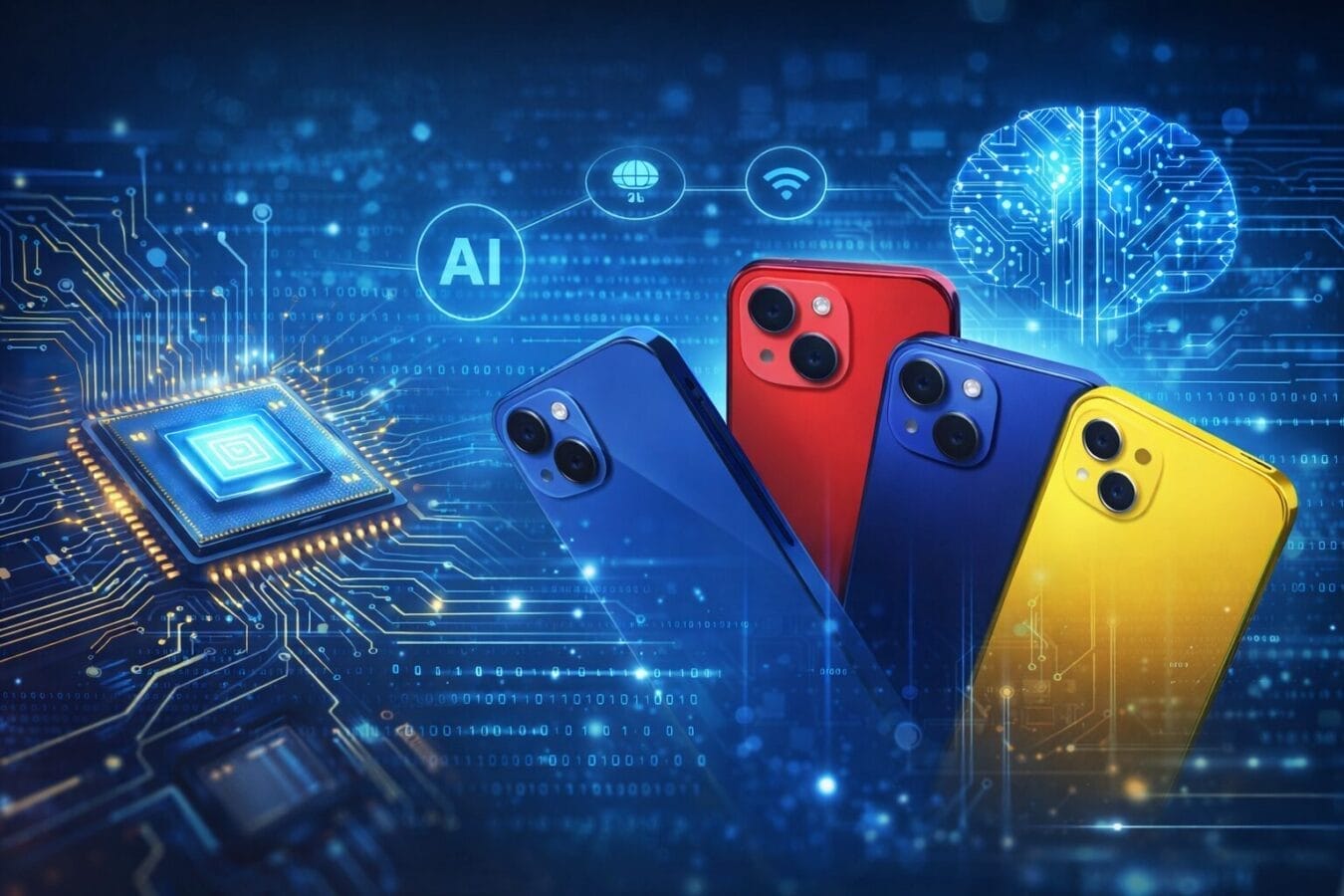
Let’s explore how smartphones are getting smarter and what truly powers this transformation.
Smartphones today are no longer just tools for calling or messaging. They have quietly evolved into intelligent companions that understand our habits, adapt to our needs, and make everyday tasks easier and faster. This growing “smartness” is not limited to better cameras or faster processors—it is the result of major improvements in hardware, software, artificial intelligence, and energy efficiency working together.
Let’s explore how smartphones are getting smarter and what truly powers this transformation.
Table of Contents
The Brain Behind the Phone: Smarter Processors
At the heart of every smartphone lies its processor, often called the “brain” of the device. Earlier, smartphone performance was mainly judged by clock speed and core count. Today, the focus has shifted toward efficiency, intelligence, and specialized computing.
Modern processors are designed to handle multiple tasks simultaneously without slowing down. Whether you’re switching between apps, editing photos, streaming videos, or playing games, the processor ensures smooth performance while consuming less power.
More importantly, processors now include dedicated AI cores. These allow phones to perform intelligent tasks—like real-time photo enhancement, voice recognition, and language translation—directly on the device, without depending heavily on the internet.
Artificial Intelligence: The Real Game Changer
Artificial Intelligence (AI) is one of the biggest reasons smartphones feel smarter today. Unlike earlier phones that followed fixed instructions, AI-powered smartphones can learn from user behavior and adapt accordingly.
For example:
Your phone learns which apps you open most often and keeps them ready in memory.
It adjusts brightness, sound, and battery usage based on your daily routine.
Voice assistants understand natural language better and respond more accurately.
Typing becomes smarter with improved predictions and autocorrect.
All of this happens quietly in the background, making the phone feel faster, more personal, and more responsive over time.
Cameras That Think Before You Click
Smartphone cameras have improved dramatically, not just because of better lenses, but because of intelligent image processing.
Today’s smartphones analyze scenes in real time. Before you even press the shutter button, the camera:
Detects faces, objects, and lighting conditions
Adjusts exposure, color balance, and sharpness automatically
Reduces noise and improves details using AI
Portrait mode, night photography, and video stabilization are all powered by smart algorithms rather than hardware alone. Even budget smartphones now deliver camera performance that once required professional equipment.
Smarter Displays and Better Visual Experience
Displays have also become more intelligent. Modern smartphones can adjust refresh rates dynamically depending on what you are doing. When you’re reading an article, the screen slows down to save power. When you’re gaming or scrolling quickly, it speeds up for smoother visuals.
Additionally, screens now adapt color temperature based on ambient lighting, reducing eye strain. HDR support, better brightness control, and intelligent touch response make displays more comfortable and efficient than ever.
Battery Intelligence: More Power, Less Worry
Battery life used to be a major concern for smartphone users. While battery sizes have increased, the real improvement comes from smart power management.
Modern smartphones use AI to:
Identify apps that consume unnecessary power
Restrict background activity when not needed
Optimize charging speed to protect battery health
Learn charging habits to reduce long-term battery degradation
As a result, phones last longer on a single charge and maintain battery health for years, not just months.
Faster and Smarter Connectivity
Connectivity is another area where smartphones have become smarter. Newer devices handle network switching seamlessly, moving between Wi-Fi and mobile data without interrupting your activity.
With advanced processors and optimized software:
Video calls remain stable even on weak networks
Downloads resume automatically if interrupted
Bluetooth and wireless accessories connect faster and more reliably
This makes smartphones more dependable, especially for work, navigation, and online communication.
Gaming and Performance Optimization
Smartphones are now powerful enough to handle console-level gaming. But raw power alone is not enough. Modern phones use intelligent performance management to balance speed, heat, and battery usage.
Instead of running at full power all the time, phones adjust performance based on:
Game requirements
Device temperature
Available battery
This ensures smoother gameplay without overheating or excessive battery drain.
Security That Learns and Protects
Security has also evolved beyond simple passwords. Smartphones now use intelligent biometric systems, such as fingerprint scanners and facial recognition, that improve accuracy over time.
AI helps detect suspicious behavior, protect sensitive data, and isolate risky apps. On-device processing ensures that personal data remains private and secure, reducing reliance on cloud servers.
Software That Feels Personal
Modern smartphone software is designed to feel more human and intuitive. Features like smart suggestions, automated routines, and contextual reminders make daily interactions smoother.
Your phone can:
Suggest routes based on traffic patterns
Remind you of tasks at the right moment
Silence notifications when you’re busy
Prioritize important alerts automatically
This level of personalization was unimaginable just a few years ago.
The Bigger Picture: Smartphones as Digital Assistants
Today’s smartphones are no longer just gadgets. They act as digital assistants, productivity tools, entertainment hubs, and creative studios—all in one device.
As processors become more efficient and AI continues to advance, smartphones will rely even less on cloud computing. This means faster responses, better privacy, and smarter offline capabilities.
Conclusion: Smartness Is About Experience, Not Just Speed
The true smartness of a smartphone is not measured by numbers alone. It’s about how naturally it fits into your life—how well it understands you, adapts to you, and simplifies everyday tasks.
With intelligent processors, AI-driven software, smarter cameras, efficient batteries, and secure systems, smartphones are evolving into devices that don’t just respond to commands but anticipate needs.
And this evolution is only just beginning.
Ends.
Trending

Ayush Singhal is the founder and chief editor of TechMitra.in — a tech hub dedicated to simplifying gadgets, AI tools, and smart innovations for everyday users. With over 15 years of business experience, a Bachelor of Computer Applications (BCA) degree, and 5 years of hands-on experience running an electronics retail shop, Ayush brings real-world gadget knowledge and a genuine passion for emerging technology.
At TechMitra, he covers everything from AI breakthroughs and gadget reviews to app guides, mobile tips, and digital how-tos. His goal is simple — to make tech easy, useful, and enjoyable for everyone. When he’s not testing the latest devices or exploring AI trends, Ayush spends his time crafting tutorials that help readers make smarter digital choices.
📍 Based in Lucknow, India
💡 Focus Areas: Tech News • AI Tools • Gadgets • Digital How-Tos
📧 Email: contact@techmitra.in
🔗 Full Bio: https://techmitra.in/about-us/