

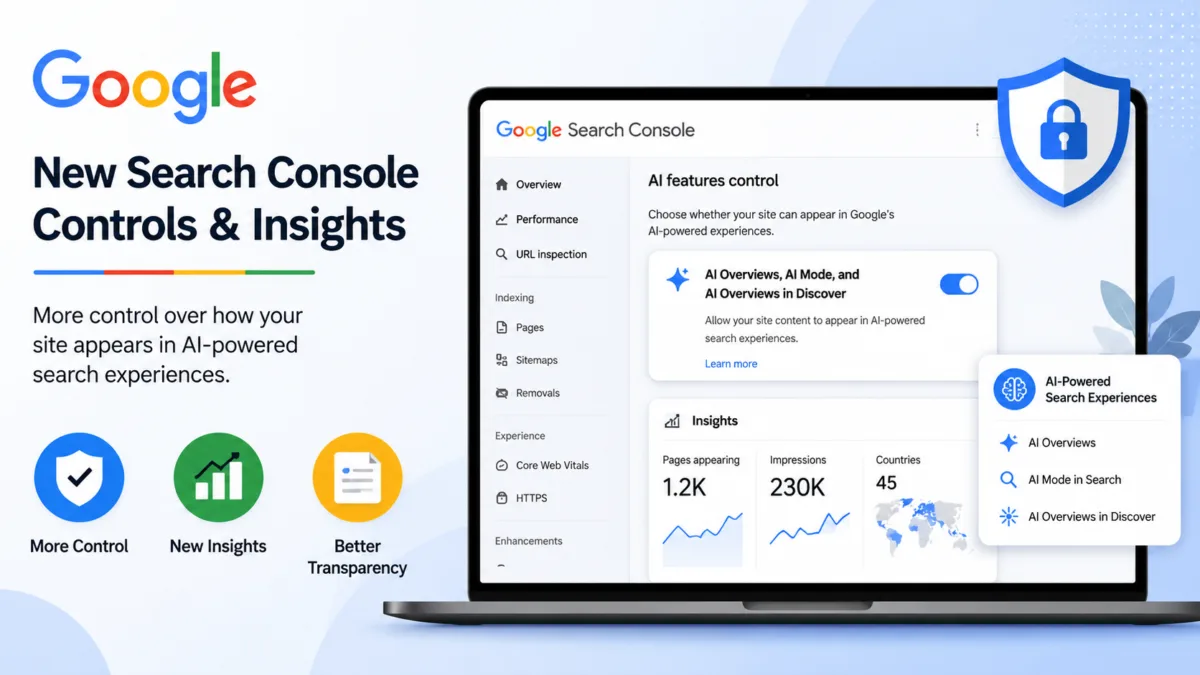
Disclaimer: AI-generated representative image. Not an official Google image or screenshot.
Google is testing to give website owners more control over how their content appears in its growing ecosystem of AI-powered search features. The company has announced new Search Console tools that will allow publishers to decide whether their websites can be included in AI-generated search experiences such as AI Overviews, AI Mode in Search, and AI Overviews in Discover.
The update is currently being tested with a limited group of website owners in the United Kingdom and is expected to expand globally in the coming months.
Table of Contents
Also Read : Google Introduces Docs Live at Google I/O 2026: Gemini Voice AI Comes to Gmail, Docs, and Keep
Google Adds Opt-Out Controls for AI Search Features
As AI-generated search results become more common, many publishers have expressed concerns about how their content is used within these experiences. To address these concerns, Google is introducing a dedicated control within Search Console according to Search Engine Land.
The new setting will allow website owners to choose whether their content can appear in:
- AI Overviews in Google Search
- AI Mode in Search
- AI Overviews in Discover
If a publisher decides to disable this option, their website content and links will no longer be used within these AI-generated responses.
Google says the feature is designed to provide greater transparency and flexibility, allowing publishers to make informed decisions about how their content is displayed across Google’s AI products.
No Impact on Traditional Search Rankings
One of the biggest concerns among website owners is whether opting out could negatively affect search rankings.
Google has clarified that using this new control will not influence rankings in traditional search results. The company stated that the opt-out setting will only affect visibility within generative AI search experiences.
This means websites that choose not to participate in AI Overviews will continue to be indexed and ranked normally in Google’s standard search results.
However, publishers who opt out will not receive impressions or traffic generated through AI-powered search features.
New AI Visibility Insights Coming to Search Console
Alongside the new controls, Google is also introducing enhanced reporting features within Search Console.
Website owners will soon be able to access detailed insights showing how their webpages are performing within AI-generated search experiences.
The new reporting tools will provide information such as:
- Which webpages appeared in AI-generated responses
- Impression data from AI search features
- Countries where the AI-generated appearances occurred
- Performance trends related to AI Overviews and AI Mode
Google has also confirmed that additional metrics will be added over time as these reporting tools evolve.
Why This Update Matters for Publishers
The rise of AI-generated search results has created both opportunities and challenges for website owners. While AI Overviews can increase visibility, some publishers worry that users may get answers directly from AI summaries without visiting their websites.
With these new controls, publishers can now make strategic decisions based on their goals:
- Participate in AI search experiences for additional exposure.
- Opt out if they prefer to focus solely on traditional search traffic.
- Gain better visibility into how AI-generated search features are using their content.
The added reporting tools also help publishers measure the real impact of AI search traffic rather than relying on assumptions.
Benefits of Google’s AI Overview Controls In Search Console
1. Greater Control Over Content Usage
Publishers can now decide whether their content is included in AI-generated responses, giving them more authority over how their information is distributed.
2. Improved Transparency
The new reporting tools provide clear insights into when and where content appears within AI-powered search experiences.
3. Better Data for SEO Decisions
Website owners can evaluate the performance of AI-related traffic and determine whether participation aligns with their business objectives.
4. No Ranking Penalty
Google has confirmed that opting out of AI Overviews will not hurt rankings in standard search results.
5. Enhanced Performance Monitoring
The new country-level and impression-level data can help publishers understand audience reach and optimize content strategies accordingly.
6. Increased Publisher Trust
By offering opt-out controls and detailed reporting, Google is addressing concerns from publishers about transparency and content ownership in the AI era.
What This Means for SEO Professionals
For SEO professionals and content creators, these updates represent an important shift in how website performance is measured.
Traditional metrics such as clicks, impressions, and rankings will now need to be analyzed alongside AI visibility metrics. Understanding how content appears in AI Overviews could become a key part of future SEO strategies.
As Google continues expanding AI-powered search experiences, having access to detailed AI performance data will help publishers adapt more effectively.
Final Thoughts
Google’s latest Search Console update is a significant step toward giving website owners more control and transparency in the age of AI-powered search. By allowing publishers to opt in or out of AI Overviews and providing dedicated reporting tools, Google is offering a more balanced approach between innovation and publisher choice.
While the feature is currently limited to selected website owners in the UK, a wider global rollout is expected in the future. For publishers, SEO professionals, and content creators, these updates could play an important role in shaping content strategies as AI becomes an increasingly central part of the search experience.

Ayush Singhal is the founder and chief editor of TechMitra.in — a tech hub dedicated to simplifying gadgets, AI tools, and smart innovations for everyday users. With over 15 years of business experience, a Bachelor of Computer Applications (BCA) degree, and 5 years of hands-on experience running an electronics retail shop, Ayush brings real-world gadget knowledge and a genuine passion for emerging technology.
At TechMitra, he covers everything from AI breakthroughs and gadget reviews to app guides, mobile tips, and digital how-tos. His goal is simple — to make tech easy, useful, and enjoyable for everyone. When he’s not testing the latest devices or exploring AI trends, Ayush spends his time crafting tutorials that help readers make smarter digital choices.
📍 Based in Lucknow, India
💡 Focus Areas: Tech News • AI Tools • Gadgets • Digital How-Tos
📧 Contact: Get in touch →
🔗 Full Bio: https://techmitra.in/about-us/