
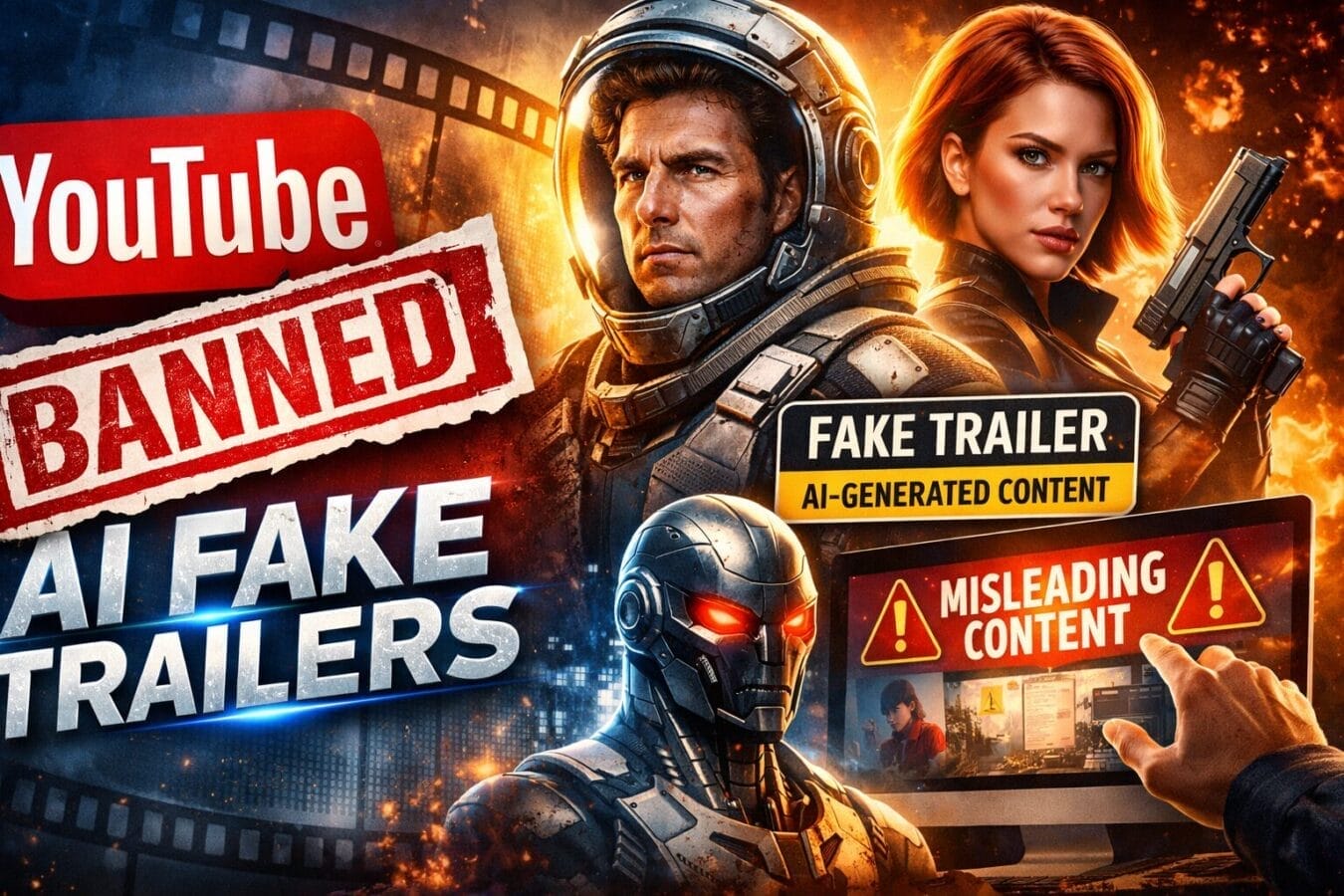
YouTube bans fake AI channels in a decisive move against misleading content, permanently removing two popular accounts that were uploading AI-generated fake movie trailers to attract views. The channels, which together had over a million subscribers, were found violating YouTube’s deceptive content and synthetic media policies by presenting manipulated visuals as authentic promotional material.
The banned channels — Screen Culture, based in India, and KH Studio, based in Georgia — were known for uploading fake trailers that closely resembled official movie promotions. According to reports, both channels had already lost monetization earlier this year and have now been removed entirely for repeated policy violations.
Table of Contents
What Happened: From Monetization Suspension to Permanent Ban
The development was first reported by Deadline, which revealed that both channels are no longer searchable on YouTube. Attempts to access their URLs now redirect users to a blank page stating that the content is unavailable — a clear indication of permanent removal.
Independent checks by journalists further confirmed that the channels had been wiped from the platform. This follows months of scrutiny, during which YouTube investigated how these creators were using AI-generated visuals combined with official footage from real movies to create trailers that appeared authentic at first glance.
At their peak, Screen Culture and KH Studio reportedly had more than two million subscribers combined and amassed over one billion total views, making them some of the most visible examples of AI-driven clickbait content on the platform.
How the Fake Trailers Worked
The strategy used by these channels was deceptively simple — and highly effective.
They relied on:
AI-generated character images and scenes
Short clips from official trailers or films
Titles and thumbnails designed to mimic studio releases
Timely uploads aligned with trending movie announcements
To an average viewer scrolling through YouTube, these videos looked like early teasers or surprise releases from major film studios. Many users clicked without realizing they were watching fan-made or AI-manipulated content.
This approach exploited both human curiosity and algorithmic momentum, allowing the videos to rack up millions of views before being flagged.
YouTube’s Policy on Misleading and Synthetic Content
YouTube has long had policies against deceptive practices, but the rise of generative AI has forced the company to be far more explicit.
Under its current rules, creators are prohibited from:
Using false or misleading titles and thumbnails
Presenting manipulated or AI-generated content as real
Combining synthetic media with real footage in a way that deceives viewers
Failing to disclose when content is substantially altered or AI-generated
YouTube also requires creators to clearly label realistic AI content so viewers are not misled into believing it is authentic.
A YouTube spokesperson, Jack Malone, explained the company’s position in a statement to The Verge:
“Following the initial suspension, these channels made the necessary improvements to rejoin the YouTube Partner Program. However, after monetization was reinstated, they clearly violated our spam and deceptive metadata policies, and as a result, they have been removed from the platform.”
The ‘Fan Trailer’ Loophole — and Why It Failed
After YouTube initially suspended ads on both channels, the creators attempted to comply by adding labels such as “fan trailer” or “parody” to their video titles. This move temporarily worked, and monetization was restored.
However, reports suggest that in the following months:
These disclaimers were quietly removed
Titles and thumbnails once again resembled official releases
The same deceptive patterns resumed
This pattern of temporary compliance followed by repeat violations appears to have been the final trigger for YouTube’s decision to permanently ban the channels.
Inside Screen Culture’s AI Strategy
In an interview cited by Deadline, Nikhil P. Choudhary, founder of Screen Culture, revealed how industrial-scale the operation had become. He reportedly employed more than 10 editors whose sole task was to produce AI-generated fake trailers.
According to the report, the strategy involved:
Uploading videos extremely quickly after movie announcements
Making frequent edits to bypass automated detection
Tweaking thumbnails, titles, and descriptions repeatedly
Riding early engagement spikes before moderation kicked in
This approach was designed to “game” YouTube’s recommendation system — a tactic that worked for years but ultimately backfired.
Why This Ban Matters for AI Creators
This incident marks a turning point in how platforms treat AI-generated content. YouTube is not banning AI itself — but it is drawing a hard line against misuse.
Key takeaways for creators:
AI-generated content must be transparently disclosed
“Fan-made” labels must be consistent, not temporary
Realistic AI media cannot impersonate official sources
Repeated violations can lead to permanent removal, not just demonetization
For creators running tech, movie, or AI-focused channels, this case serves as a cautionary tale: algorithmic success does not equal policy safety.
The Bigger Picture: AI, Trust, and Platform Responsibility
As generative AI becomes more powerful, platforms like YouTube face a growing challenge — how to encourage creativity without eroding viewer trust.
Fake trailers may seem harmless entertainment to some, but they:
Mislead audiences
Undermine official creators and studios
Spread confusion across social media
Damage platform credibility
By taking decisive action against high-profile offenders, YouTube is signaling that scale will not protect rule-breakers, even if the content drives massive engagement.
Final Thoughts On Youtube Bans Fake AI Channels
The permanent banning of Screen Culture and KH Studio shows that YouTube is moving beyond warnings and monetization suspensions when it comes to AI-driven deception. While artificial intelligence opens new creative doors, platforms are making it clear that transparency and honesty are non-negotiable.
For creators experimenting with AI, the message is simple:
Use AI to enhance creativity — not to impersonate reality.
Disclaimer: The information in this article is based on details first reported by official sources and publicly available news, including Google News. We have adapted and rewritten the content for clarity, SEO optimization, and reader experience. All trademarks and images belong to their respective owners.
Trending

Ayush Singhal is the founder and chief editor of TechMitra.in — a tech hub dedicated to simplifying gadgets, AI tools, and smart innovations for everyday users. With over 15 years of business experience, a Bachelor of Computer Applications (BCA) degree, and 5 years of hands-on experience running an electronics retail shop, Ayush brings real-world gadget knowledge and a genuine passion for emerging technology.
At TechMitra, he covers everything from AI breakthroughs and gadget reviews to app guides, mobile tips, and digital how-tos. His goal is simple — to make tech easy, useful, and enjoyable for everyone. When he’s not testing the latest devices or exploring AI trends, Ayush spends his time crafting tutorials that help readers make smarter digital choices.
📍 Based in Lucknow, India
💡 Focus Areas: Tech News • AI Tools • Gadgets • Digital How-Tos
📧 Contact: Get in touch →
🔗 Full Bio: https://techmitra.in/about-us/