
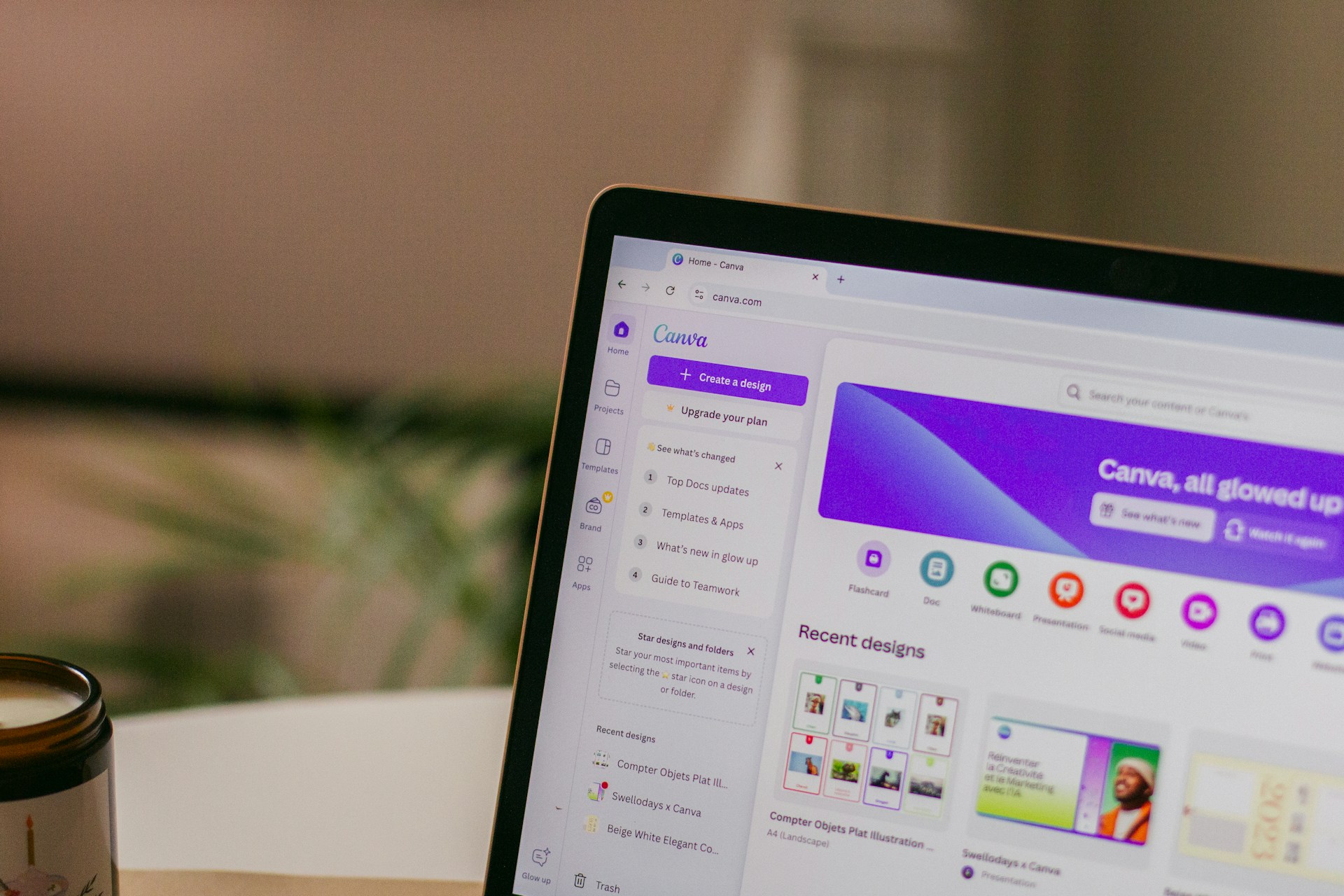
Canva Magic Layers Introduced ( Photo by Swello on Unsplash )
Canva has announced a powerful new artificial intelligence feature called Magic Layers, designed to change the way people edit and reuse images in design projects. The Sydney-based visual communication platform revealed the tool in a press announcement on Wednesday, highlighting its ability to convert static images into fully editable layered designs.
The feature is currently available in public beta in select regions, with plans for a wider global rollout in the near future. With Magic Layers, designers, marketers, and content creators can now take a flat image and break it into individual editable elements, making design modification significantly easier.
Table of Contents
Also Read : Google Launches Nano Banana 2: Faster, Smarter AI Image Generation with Gemini 3.1 Flash
What Is Canva Magic Layers?
Magic Layers is an AI-powered design tool that transforms flat images such as PNG or JPG files into layered designs. Instead of working with a single static image, users can edit individual elements such as text, shapes, and layouts separately.
In simple terms, Magic Layers allows users to:
- Convert a static image into editable vector elements
- Separate design components into distinct layers
- Modify text, layout, and visual elements independently
- Reuse existing designs without recreating them from scratch
This functionality significantly expands the possibilities of AI-generated visual content. Previously, AI-generated images often came as non-editable static files, forcing users to regenerate images or manually recreate designs to make changes.
Magic Layers eliminates that limitation by allowing direct editing of individual components inside a design.
Built on Canva’s Design Model
The new feature is powered by the Canva Design Model, a proprietary foundation model launched by the company in October 2025. This AI model is designed to understand design structure, layout relationships, and visual hierarchy.
Instead of simply detecting objects, the system analyzes the entire composition of the design, including:
- Typography placement
- Graphic elements
- Layout alignment
- Color relationships
- Component hierarchy
Once the analysis is complete, the tool automatically separates different parts of the image into editable layers while preserving the original layout.
For example, if an uploaded poster contains text, shapes, and icons, Magic Layers will:
- Convert text into live editable text boxes
- Extract graphical elements as separate design objects
- Maintain the original layout and alignment
This approach allows users to instantly transform an image into a working design file.
How Magic Layers Works
Using Magic Layers is designed to be simple and beginner-friendly. Canva has integrated the feature directly into its design workflow.
Step-by-Step Process
- Upload an image (PNG or JPG format)
- Canva’s AI analyzes the design structure
- The system converts the image into vector-like editable layers
- Each element becomes individually editable
- Users can adjust text, colors, layout, or graphics as needed
The process happens automatically, meaning users don’t need to manually trace or recreate the design.
One of the biggest advantages is that users no longer need to rewrite AI prompts or regenerate images repeatedly if the generated result is not perfect. Instead, they can simply edit the design directly inside Canva.
Why Magic Layers Is a Big Deal for Designers
Magic Layers addresses one of the biggest limitations of generative AI design tools: lack of editability.
Until now, most AI image generators produced finalized images with no editable structure. If a designer wanted to adjust text or change colors, they had to recreate the design manually or regenerate the image.
Magic Layers changes that workflow completely.
Key Benefits
1. Faster Design Editing
Users can quickly adjust elements without rebuilding the design from scratch.
2. Better AI-Generated Content Control
Instead of accepting AI output as final, creators can refine and customize the result.
3. Improved Design Reusability
Existing images can be converted into templates for future projects.
4. Beginner-Friendly Editing
Even users with limited design experience can modify complex layouts.
For content creators, social media managers, and small businesses, this feature could significantly reduce the time needed to create marketing graphics.
Current Limitations
Although Magic Layers introduces powerful capabilities, the feature is still in public beta, which means some limitations remain.
Currently, the tool supports:
- Single-page images only
- PNG and JPG formats
Multi-page files, PDFs, and other complex formats are not yet supported. However, Canva has confirmed that additional capabilities are under development.
As the beta progresses, more file formats and advanced editing features are expected to be added.
Magic Layers Availability and Supported Regions
At launch, Magic Layers is available in public beta in select regions, including:
- Australia
- Canada
- United Kingdom
- United States
Canva has stated that the feature will expand globally soon, although the company has not announced an exact release timeline for other countries.
Users outside these regions may need to wait until the broader rollout begins.
Subscription Requirement
Because Magic Layers is part of Canva’s AI toolset, users will need an active Canva subscription to access it.
While Canva offers a free tier, advanced AI features are typically included in paid plans such as Canva Pro or enterprise subscriptions.
This means users interested in experimenting with Magic Layers will likely need to upgrade their accounts once the feature becomes widely available.
The Bigger Picture: AI-Driven Design Evolution
The launch of Magic Layers reflects a broader trend in AI-powered creativity tools. Platforms like Canva are moving beyond simple image generation and focusing on AI-assisted design workflows.
Instead of replacing designers, these tools aim to speed up repetitive tasks, allowing creators to focus on creativity and strategy.
By enabling editable AI-generated designs, Canva is bridging the gap between generative AI and professional design software.
If widely adopted, tools like Magic Layers could reshape how designers, marketers, and businesses create visual content.
Final Thoughts
Canva’s Magic Layers represents a significant step forward in AI-powered design editing. By converting static images into fully editable layered designs, the tool makes it easier for users to modify, reuse, and refine visual assets.
Although the feature is still in beta and limited to select regions, it demonstrates how AI can transform traditional design workflows. Once globally available, Magic Layers could become one of Canva’s most impactful tools for creators worldwide.
FAQs
What is Canva Magic Layers?
Magic Layers is an AI tool from Canva that converts static images into editable layered designs, allowing users to modify text, layout, and graphics individually.
Which file formats does Magic Layers support?
Currently, the feature supports single-page PNG and JPG images.
Is Magic Layers available worldwide?
No. It is currently in public beta in Australia, Canada, the UK, and the US, with global availability expected later.
Do you need a Canva subscription to use Magic Layers?
Yes. Since it is part of Canva’s AI features, a Canva subscription is required to access it.
Disclaimer: The information in this article is based on official announcements, company statements, and publicly available reports. We have rewritten and adapted the content for clarity, accuracy, and reader experience. All trademarks, brand names, and images belong to their respective owners.

Ayush Singhal is the founder and chief editor of TechMitra.in — a tech hub dedicated to simplifying gadgets, AI tools, and smart innovations for everyday users. With over 15 years of business experience, a Bachelor of Computer Applications (BCA) degree, and 5 years of hands-on experience running an electronics retail shop, Ayush brings real-world gadget knowledge and a genuine passion for emerging technology.
At TechMitra, he covers everything from AI breakthroughs and gadget reviews to app guides, mobile tips, and digital how-tos. His goal is simple — to make tech easy, useful, and enjoyable for everyone. When he’s not testing the latest devices or exploring AI trends, Ayush spends his time crafting tutorials that help readers make smarter digital choices.
📍 Based in Lucknow, India
💡 Focus Areas: Tech News • AI Tools • Gadgets • Digital How-Tos
📧 Email: contact@techmitra.in
🔗 Full Bio: https://techmitra.in/about-us/