
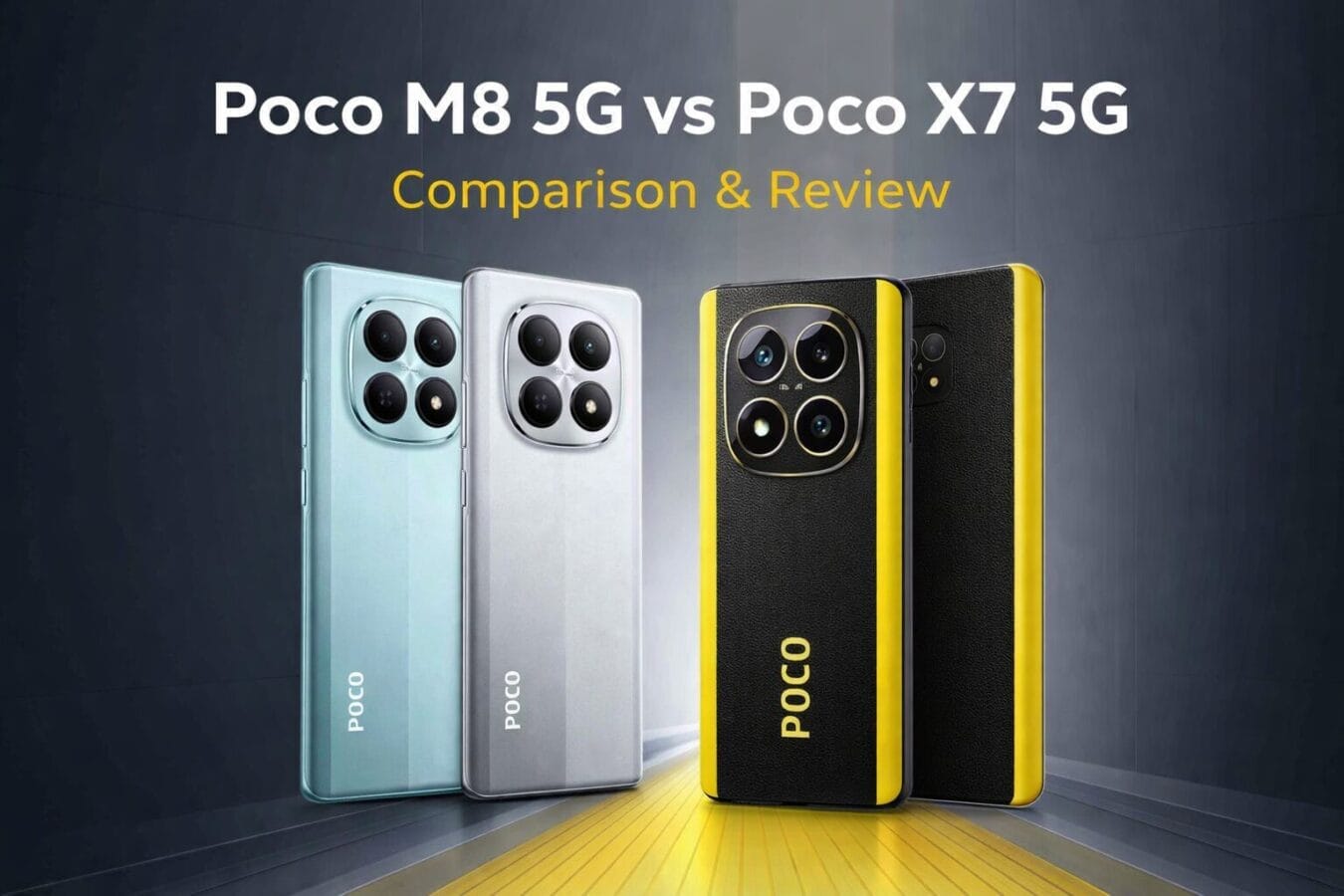
Poco has officially launched the Poco M8 5G in India, expanding its mid-range smartphone lineup with a device that looks and feels far more premium than what the M-series traditionally offered. With a curved AMOLED display, Snapdragon 6 Gen 3 chipset, fast charging, and dust-water resistance, the M8 is clearly designed to attract users who want flagship-like features at a sub-₹20,000 price.
However, after comparing it closely with last year’s Poco X7, which I personally use, an interesting picture emerges — one that may explain why many Xiaomi and Poco models are no longer selling as strongly as before.
Table of Contents
Poco M8 5G Price and Availability in India
The Poco M8 5G is available in three configurations:
| Variant | Price |
|---|---|
| 6GB + 128GB | ₹18,999 |
| 8GB + 128GB | ₹19,999 |
| 8GB + 256GB | ₹21,999 |
Buyers can get:
₹2,000 instant discount using ICICI, HDFC, or SBI cards
₹1,000 extra launch-day discount
With offers, the effective starting price drops to ₹15,999. The phone goes on sale from January 13 on Flipkart in Carbon Black, Glacial Blue, and Frost Silver.
The Display Is the M8’s Biggest Upgrade
The Poco M8 display features a 6.77-inch curved AMOLED Screen :
Full HD+ resolution
120Hz refresh rate
3,200 nits peak brightness
100% DCI-P3 color coverage
Wet Touch support
For a phone in this price range, this is an excellent panel. It finally brings true flagship-style visuals to Poco’s M-series, which used to rely on basic LCD panels.
But here’s where the comparison gets interesting.
The Poco X7, launched last January, already offers:
A 1.5K curved AMOLED display
Dolby Vision and HDR10+
3,000 nits brightness
In everyday use, the X7’s display still looks richer, sharper, and more cinematic than the newer M8.
Performance: Snapdragon 6 Gen 3 vs Dimensity 7300 Ultra
The Poco M8 runs on the Snapdragon 6 Gen 3, a 4nm chipset designed for upper mid-range phones. It is fast, efficient, and well suited for gaming, multitasking, and 5G usage.
But my Poco X7 uses the MediaTek Dimensity 7300 Ultra, which is still a more powerful processor. In real-world use — gaming, camera processing, multitasking — the X7 feels more stable under load and maintains smoother performance.
So while the M8 is powerful, it is not actually an upgrade over last year’s X7.
Camera: New Phone, Simpler Setup
The Poco M8 uses:
50MP main camera
2MP secondary sensor
20MP front camera
4K video recording
It is perfectly fine for social media, video calls, and casual photography.
But the Poco X7 offers:
50MP Sony sensor with OIS
8MP ultra-wide
2MP macro
Better video stabilization
More versatile shooting modes
Even though the M8 is newer, the X7 still takes better photos and videos, especially in low light and motion shots.
Battery, Charging, and Durability
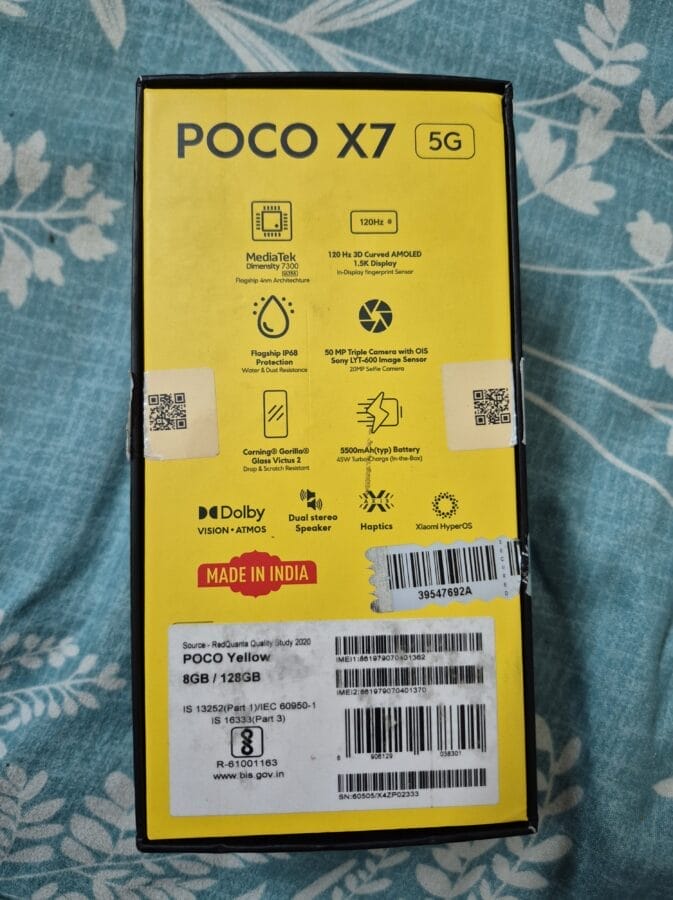
The Poco M8 has a 5520mAh battery with 45W fast charging and even reverse wired charging. It also introduces IP65 + IP66 protection — a big improvement for the M-series.
But again, the Poco X7 stays ahead with:
5500mAh battery
45W charging
IP68 water resistance
Gorilla Glass Victus 2
This makes the X7 much more durable for long-term use.
Why Poco M8 Looks So Familiar
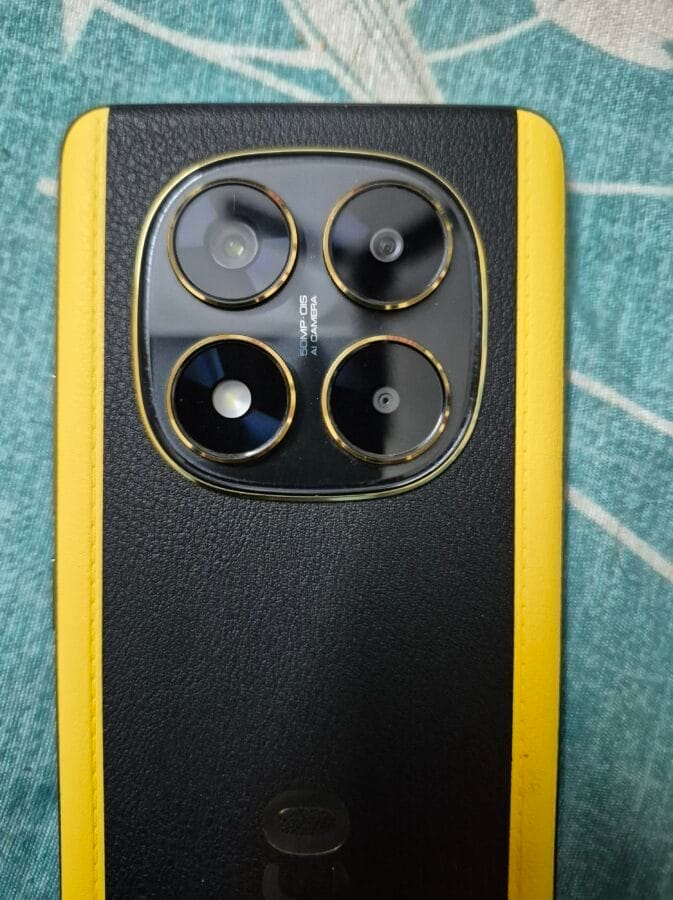
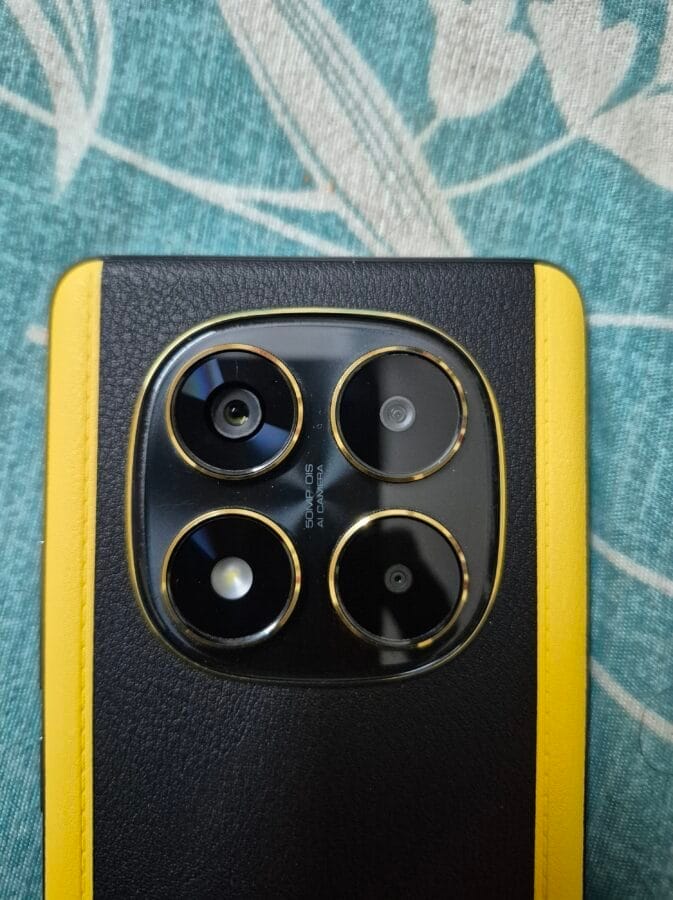
After seeing the official Poco M8 images and comparing them with my own Poco X7, the design similarity is impossible to miss.
Both phones use:
A square camera module
Four circular lens cutouts
Rounded corners
Centered layout
Same overall visual balance
Even the recently launched Redmi Note 15 5G Available on amazon follows this same design pattern.
What Xiaomi is doing here is reusing last year’s Poco X7 design language across newer mid-range phones. While this reduces production costs, it also makes new launches feel less exciting — especially when the older model is still available with better hardware.
Poco M8 vs Poco X7 vs Poco M7 – Key Specifications
| Feature | Poco M8 5G (2026) | Poco X7 5G (2025) | Poco M7 5G (2024) |
|---|---|---|---|
| Processor | Snapdragon 6 Gen 3 (4nm) | Dimensity 7300 Ultra (4nm) | Snapdragon 4 Gen 2 |
| Performance Level | Upper mid-range | Near-flagship mid-range | Entry-level |
| Rear Camera | 50MP + 2MP | 50MP OIS + 8MP Ultra-wide + 2MP Macro | 50MP |
| Front Camera | 20MP | 20MP | 8MP |
| Video Recording | Up to 4K | 4K @30fps, 1080p @60fps | 1080p |
| Display | 6.77″ Curved AMOLED, 120Hz | 6.67″ Curved AMOLED, Dolby Vision, HDR10+ | 6.88″ HD+ LCD, 120Hz |
| Resolution | Full HD+ | 1.5K (2712 × 1220) | HD+ |
| Peak Brightness | 3,200 nits | 3,000 nits | 600 nits |
| Battery | 5520mAh | 5500mAh | 5160mAh |
| Charging | 45W + 18W Reverse | 45W Turbo | 33W |
| Water & Dust | IP65 + IP66 | IP68 (Flagship) | None |
Even though the Poco M8 5G is a newer launch, the Poco X7 still offers a better display, stronger performance, superior cameras, and flagship-level durability at nearly the same price — making it the smarter buy for informed users.
How This Affects Xiaomi and Poco Sales
This is where the strategy becomes risky.
When a buyer sees:
A new Poco M8 at ₹19,999
A Poco X7 at ₹19,999
…and both phones:
Look almost identical
Have curved AMOLED screens
Have similar camera designs
But the X7 offers:
Better processor
Better camera system
Better durability
Better display features
The logical choice becomes the older X7.
This pattern is one of the reasons Xiaomi and Poco are now facing slower sales growth in mid-range segments. Their newer phones are no longer clearly better than last year’s models — and smart buyers are noticing.
Final Verdict
The Poco M8 5G is a strong smartphone. It brings premium display, solid performance, good battery life, and long software support to the M-series.
But it is not truly an upgrade over the Poco X7.
If you are upgrading from an older M-series phone, the M8 is a great choice.
But if you can buy the Poco X7 for a similar price, it remains the better overall phone in 2026 — something I can confidently say from personal daily use.
Sometimes, last year’s flagship really is better than this year’s mid-range. 📱🔥
Disclaimer
The information in this article is based on official product specifications, publicly available data, and the author’s personal experience using the Poco X7 smartphone. Prices, availability, features, and software support details may change over time and can vary by region or retailer. Readers are advised to verify the latest information from Poco, Xiaomi, or authorized sellers before making any purchase decisions. Product comparisons and opinions expressed in this article reflect the author’s independent analysis and are not sponsored or influenced by any brand or manufacturer.
Trending

Ayush Singhal is the founder and chief editor of TechMitra.in — a tech hub dedicated to simplifying gadgets, AI tools, and smart innovations for everyday users. With over 15 years of business experience, a Bachelor of Computer Applications (BCA) degree, and 5 years of hands-on experience running an electronics retail shop, Ayush brings real-world gadget knowledge and a genuine passion for emerging technology.
At TechMitra, he covers everything from AI breakthroughs and gadget reviews to app guides, mobile tips, and digital how-tos. His goal is simple — to make tech easy, useful, and enjoyable for everyone. When he’s not testing the latest devices or exploring AI trends, Ayush spends his time crafting tutorials that help readers make smarter digital choices.
📍 Based in Lucknow, India
💡 Focus Areas: Tech News • AI Tools • Gadgets • Digital How-Tos
📧 Email: contact@techmitra.in
🔗 Full Bio: https://techmitra.in/about-us/