Huawei Showcases AI Powered Smart Power Grid Solutions at MWC 2026
In 2025 alone, the world witnessed more than 10 major power outages, disrupting electricity supply for over 1.2 billion people globally. These incidents have highlighted a growing challenge for power utilities worldwide: ensuring grid stability while simultaneously accelerating the transition toward clean and renewable energy.
As electricity demand rises and energy systems become more complex, traditional power grids are no longer enough. This is where artificial intelligence, digitalization, and smart infrastructure are stepping in — and Huawei is positioning itself at the center of this transformation.
Power Grids Are No Longer Just Transmission Systems
According to Huawei, modern power grids must evolve beyond simple electricity transmission. They now play a critical role in:
Supporting renewable energy integration
Managing unpredictable power loads
Enabling electrification at scale
Driving progress toward carbon neutrality
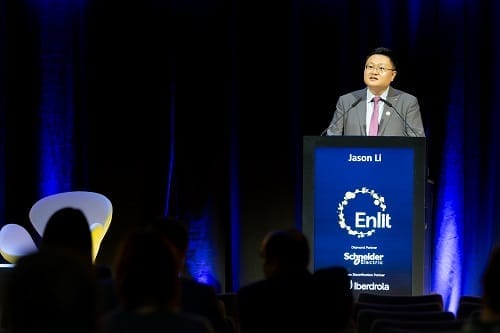
Jason Li, President of Global Marketing & Solutions at Huawei’s Electric Power Digitalization Business Unit, explains that the industry is moving toward a new phase.
“In the past, automation helped address grid challenges. In the future, power grids will become pivotal players in the global energy transition,” Li said. “Digitalization and AI are no longer optional upgrades — they are now core elements of power generation and grid operations.”
Huawei believes that AI combined with automation and telecommunications technologies will redefine how power systems operate, delivering both stability and flexibility — two priorities that are often difficult to balance.
The Distribution Network: Where the Real Challenge Lies
While power generation often gets the spotlight, Huawei sees the distribution network as the real breakthrough point for future energy systems.
The large-scale adoption of:
Distributed solar PV systems
Energy storage solutions
EV charging infrastructure
Bidirectional power flow and user-level energy transactions
has introduced new levels of complexity, particularly at the low-voltage (400V) level, where visibility and transparency are limited.
“The key to solving distribution challenges is achieving transparency at the low-voltage level,” Jason Li noted.
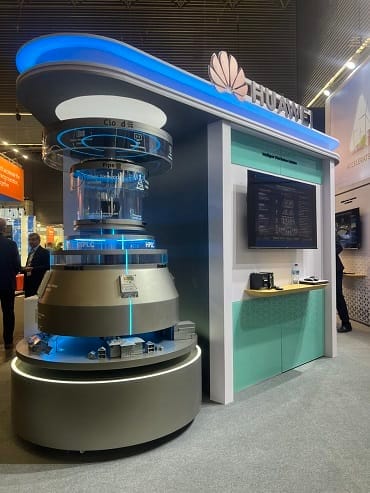
To address this, Huawei — in collaboration with industry partners — has developed its Intelligent Distribution Solution (IDS). The solution is designed to improve low-voltage grid visibility, enabling smarter decision-making, better fault detection, and enhanced operational efficiency.