
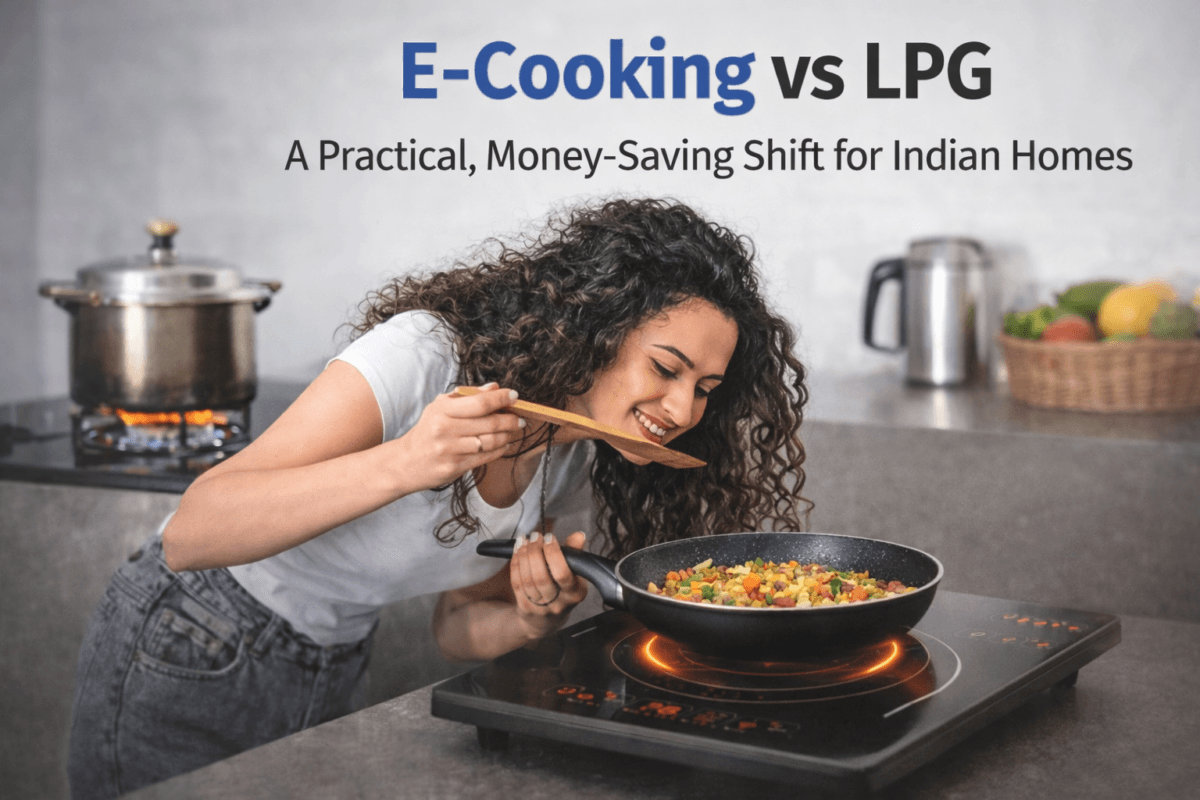
A modern Indian kitchen in transition—comparing traditional LPG cooking with efficient and cost-saving e-cooking using an induction cooktop. (AI Generated Image )
The way we cook in India is quietly undergoing a transformation. With rising LPG prices, inconsistent supply, and increasing awareness about energy efficiency, more households are exploring electric cooking (e-cooking) as a practical and future-ready alternative.
Let’s break this down in a simple, real-world way—just like we’d discuss it at home.
Also Read : Best Mixer Grinders in India (March 2026): Buying Guide, 750W vs 1000W vs Food Processor
Table of Contents
What is E-Cooking?
E-cooking simply means preparing food using electric-powered appliances instead of LPG gas. This includes devices like induction cooktops, electric rice cookers, microwaves, and electric kettles.
Unlike traditional gas stoves, these appliances convert electricity into heat efficiently—often faster and safer.
Why E-Cooking is Gaining Popularity
1. Rising LPG Costs
Over the past few years, LPG prices have steadily increased. For many middle-class households, managing monthly cooking expenses has become challenging.
Electric cooking, especially when used smartly, can reduce recurring fuel costs.
2. Better Energy Efficiency
Electric appliances—especially induction cooktops—use energy more efficiently.
- Less heat loss
- Faster cooking time
- Lower overall energy wastage
This means you get more cooking done with less energy.
3. Convenience and Ease of Use
E-cooking appliances are designed for modern lifestyles:
- No need to refill cylinders
- No risk of gas leakage
- Easy temperature control
- Lightweight and portable
For working families or small households, this convenience is a big advantage.
Types of E-Cooking Appliances You Can Use
The way we cook in India is quietly undergoing a transformation. With rising LPG prices, inconsistent supply, and increasing awareness about energy efficiency, more households are exploring electric cooking (e-cooking) as a practical and future-ready alternative.
Let’s break this down in a simple, real-world way—just like we’d discuss it at home.
What is E-Cooking?
E-cooking simply means preparing food using electric-powered appliances instead of LPG gas. This includes devices like induction cooktops, electric rice cookers, microwaves, and electric kettles.
Unlike traditional gas stoves, these appliances convert electricity into heat efficiently—often faster and safer.
Why E-Cooking is Gaining Popularity
1. Rising LPG Costs
Over the past few years, LPG prices have steadily increased. For many middle-class households, managing monthly cooking expenses has become challenging.
Electric cooking, especially when used smartly, can reduce recurring fuel costs.
2. Better Energy Efficiency
Electric appliances—especially induction cooktops—use energy more efficiently.
- Less heat loss
- Faster cooking time
- Lower overall energy wastage
This means you get more cooking done with less energy.
3. Convenience and Ease of Use
E-cooking appliances are designed for modern lifestyles:
- No need to refill cylinders
- No risk of gas leakage
- Easy temperature control
- Lightweight and portable
For working families or small households, this convenience is a big advantage.
Types of E-Cooking Appliances You Can Use
1. Induction Cooktop

- Most practical LPG alternative
- Available in 1200W, 1500W, 2000W
- Ideal for daily cooking (dal, sabzi, tea)
Check latest available Induction Cooktops on Amazon
2. Electric Rice Cooker
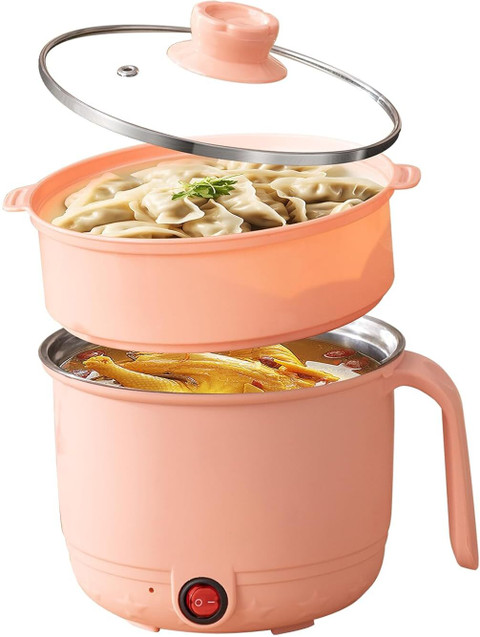
- Automatic cooking
- Keeps food warm
- Great for rice, pulao, steaming
3. Microwave Oven

- Reheating, baking, grilling
- Saves time
- Useful for quick meals
4. Electric Kettle

- Boils water quickly
- Makes tea, coffee, noodles
- Very energy efficient
5. Electric Bread Toaster

- Quick breakfast solution
- Low electricity consumption
- Perfect for busy mornings
6. Soup Maker
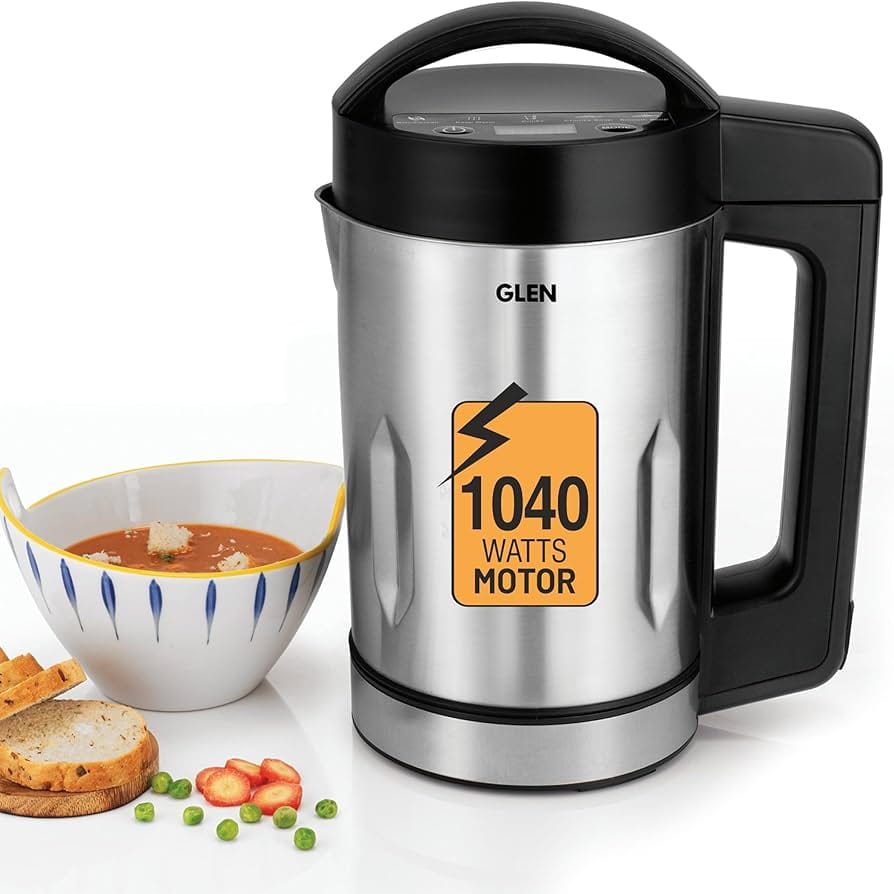
- Chop + cook + blend in one device
- Ideal for healthy diets
- Great for elderly or patients
Also Read : Best Electric Soup Maker in India (2025) – My Real Experience + Top 3 Picks
7. Air Fryer
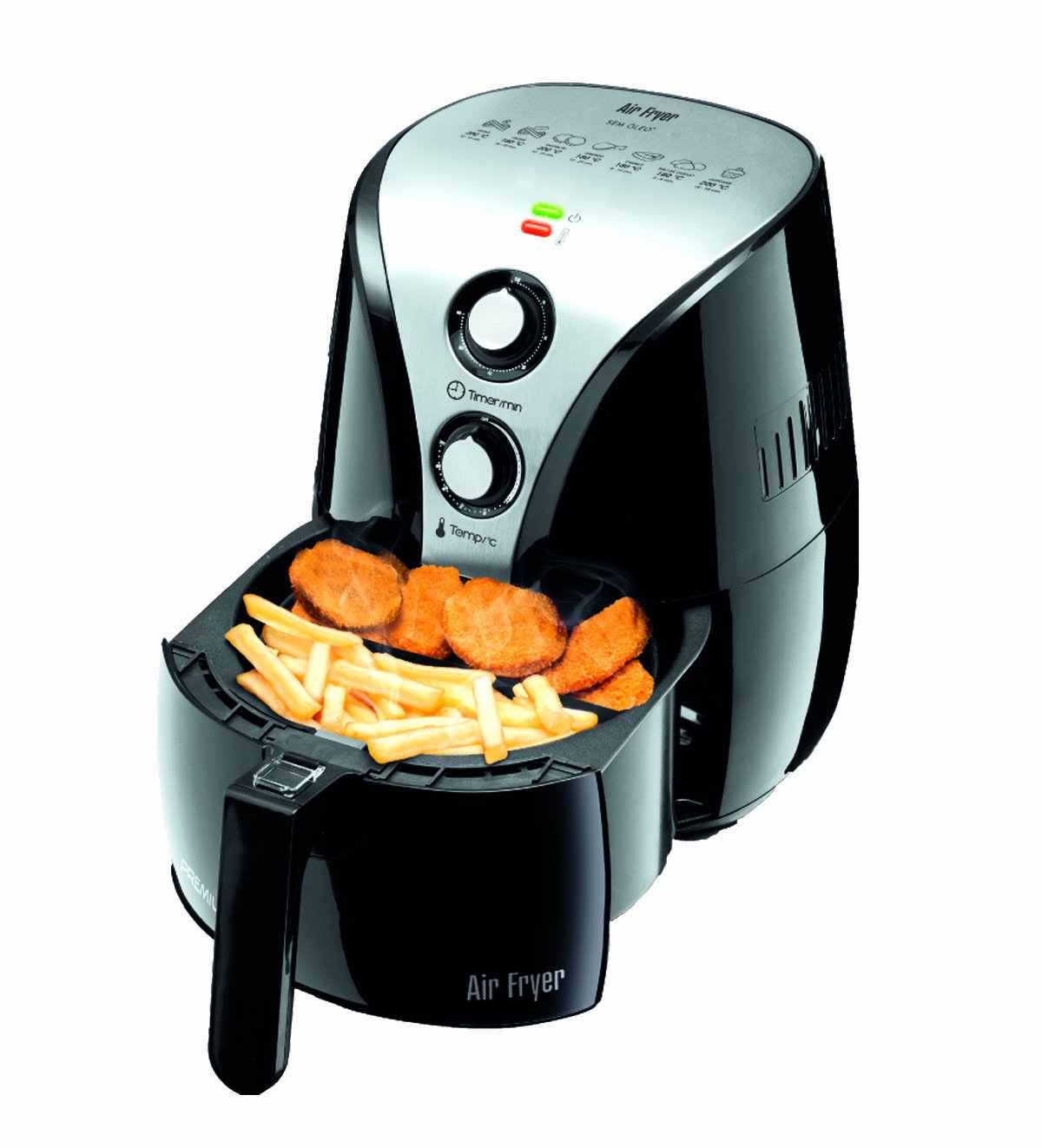
- Uses little to no oil
- Healthier alternative to deep frying
- Perfect for snacks like fries, samosa, nuggets
⚡ Important: Check Your Home’s Electric Load Before Buying
This is something most people ignore—but it’s very important.
👉 Every house has a fixed sanctioned load (like 1KW, 2KW, 3KW).
Example:
- If your home has 2KW load
- And you run:
- Fan + lights = ~300–400W
- Fridge = ~200–300W
You are already using ~700W
👉 Now if you use a 2000W induction, total load exceeds limit → risk of:
- MCB tripping
- Wiring heating
- Power cut issues
- Load Penelty In electric bill
Smart Choice:
👉 Go for 1200W induction cooktop
- Slightly slower than 2000W
- But safe and sufficient for normal cooking
✔ Perfect balance of safety + efficiency
Real Cost Comparison: LPG vs E-Cooking
Let’s calculate practically (very important for your blog readers 👇)
Induction Usage Example:
- 1200W induction = 1.2 units/hour
- If used 2 hours/day:
👉 1.2 × 2 = 2.4 units/day
- Electricity cost ≈ ₹8/unit (average)
👉 Daily cost = 2.4 × 8 = ~₹20/day
👉 Monthly cost:
= ₹20 × 30
= ₹600/month
LPG Cost:
- One LPG cylinder ≈ ₹900–₹1100
- For a family of 4 → 1 cylinder/month
Final Comparison
| Cooking Type | Monthly Cost |
|---|---|
| LPG | ₹900–₹1100 |
| E-Cooking | ~₹600 |
👉 Savings: ₹300–₹500/month
Is E-Cooking Safe?
Yes—and often safer than LPG.
Safety Benefits:
- No gas leakage risk
- Auto shut-off features
- No open flame
- Lower chances of kitchen accidents
This makes it ideal for families with kids or elderly members.
Things to Consider Before Switching
Before you completely shift to e-cooking, keep these in mind:
Power Availability
- Ensure stable electricity supply
- Backup (like inverter) helps during power cuts
Compatible Utensils
- Induction requires special flat-bottom cookware
Electricity Usage Awareness
- Use appliances efficiently to avoid high bills
Is E-Cooking the Future of Indian Kitchens?
Honestly, yes—at least partially.
India is slowly moving toward:
- Electrification
- Renewable energy (solar power)
- Energy-efficient appliances
E-cooking fits perfectly into this shift.
But for now, most households may prefer a hybrid approach:
👉 LPG + Electric appliances together
Final Thoughts
E-cooking is not just a trend—it’s a smart upgrade.
From saving money to improving safety and convenience, electric cooking offers clear benefits. While it may not completely replace LPG overnight, it’s definitely becoming an essential part of modern Indian kitchens.
If you’re planning to reduce expenses or make your kitchen more future-ready, starting with an induction cooktop + 1–2 electric appliances is the best step.
Frequently Asked Questions (FAQs)
1. Is e-cooking cheaper than LPG in India?
Yes, in most cases e-cooking is cheaper than LPG. For example, a 1200W induction used for 2 hours daily consumes around 2.4 units of electricity, costing roughly ₹20/day or ₹600/month—usually less than the cost of one LPG cylinder.
2. Can induction cooktop completely replace LPG?
Not entirely for every household. However, you can use induction for daily cooking and keep LPG as a backup. This hybrid approach is the most practical and cost-effective solution.
3. Which is the best wattage for an induction cooktop for home use?
For most Indian homes, a 1200W induction cooktop is ideal. It is energy-efficient, safe for homes with lower electricity load, and sufficient for regular cooking, though slightly slower than 2000W models.
4. What happens if I use a high-wattage appliance on low home load?
If your home has a limited load (like 2KW) and you use high-wattage appliances (2000W+), it can:
- Trip your MCB
- Cause wiring issues
- Lead to power interruptions
👉 Always choose appliances based on your sanctioned load.
5. How much electricity does an induction cooktop consume daily?
A 1200W induction running for 2 hours daily consumes:
- 2.4 units/day
- Around ₹20/day
- Approximately ₹600/month
6. Is e-cooking safe compared to LPG?
Yes, e-cooking is generally safer than LPG because:
- No gas leakage
- No open flame
- Auto shut-off features
- Lower risk of accidents
7. Can I use normal utensils on an induction cooktop?
No, induction cooktops require induction-compatible (flat-bottom, magnetic) utensils. Steel and cast iron work best.
8. Which electric appliances are useful for daily cooking?
Some of the most useful e-cooking appliances include:
- Induction cooktop
- Rice cooker
- Electric kettle
- Microwave
- Air fryer
- Bread toaster
- Soup maker
9. Does e-cooking increase electricity bills significantly?
Not if used properly. In fact, e-cooking can still be cheaper than LPG, especially when used efficiently and combined with smart appliance usage.
10. Is e-cooking suitable for rural or small towns in India?
Yes, if there is reliable electricity supply. With improving infrastructure and solar options, e-cooking is becoming more practical even outside metro cities.

Ayush Singhal is the founder and chief editor of TechMitra.in — a tech hub dedicated to simplifying gadgets, AI tools, and smart innovations for everyday users. With over 15 years of business experience, a Bachelor of Computer Applications (BCA) degree, and 5 years of hands-on experience running an electronics retail shop, Ayush brings real-world gadget knowledge and a genuine passion for emerging technology.
At TechMitra, he covers everything from AI breakthroughs and gadget reviews to app guides, mobile tips, and digital how-tos. His goal is simple — to make tech easy, useful, and enjoyable for everyone. When he’s not testing the latest devices or exploring AI trends, Ayush spends his time crafting tutorials that help readers make smarter digital choices.
📍 Based in Lucknow, India
💡 Focus Areas: Tech News • AI Tools • Gadgets • Digital How-Tos
📧 Email: contact@techmitra.in
🔗 Full Bio: https://techmitra.in/about-us/