
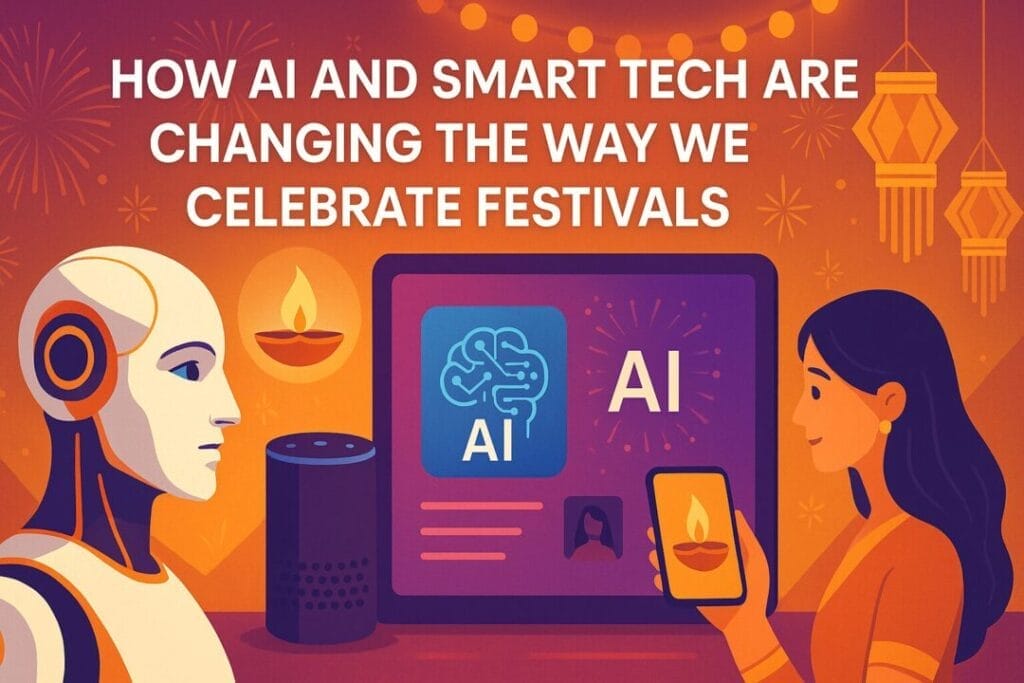
AI Festival Trends 2025: How AI Is Transforming Celebrations
Festivals have always been a time for traditions, gatherings, rituals and joy. But in the 21st century, the ways in which we celebrate are being remixed by technology — especially by artificial intelligence (AI), the Internet of Things (IoT), smart devices and digital platforms. From personalised greetings to safer mass‐gatherings, and from immersive virtual experiences to energy-efficient decorations, smart tech is reshaping the ritual and the ritual experience. Below we explore key domains where this change is unfolding, why it matters, and what it means for the future of festival-celebration.
Also Read : The Ultimate Travel Guide: 20 ChatGPT Prompts to Discover [Your City]
Table of Contents
1. Personalised Festive Experience: AI-driven Greetings, Avatars and Virtual Interaction
One of the most immediate ways you may notice technology at a festival is in how communications and interactions get new layers of personalisation. For example, brands and apps are using image-generation AI to let you create customised avatars or greetings for a festival like Diwali. A recent India campaign with one major brand and Google let users generate “Festicons” using the Gemini model.
Beyond branding, families and friends separated by location are experiencing tech-enabled celebrations: virtual pujas, AR/VR rangoli designs, or video-calls augmented by AI filters for festive moods. These blends of tradition + innovation help bridge distance and make celebrations richer for younger digital-native participants.
The benefit? People feel more connected and more engaged. The downside? There is risk of digital fatigue or losing the “analog” charm of gathering and ritual. For tech websites, this domain offers rich storytelling opportunities: “best apps for virtual festive greetings”, “how to make an AI avatar for your festival card”, or “tips for hosting hybrid digital-in-person celebrations”.
2. Smart Decorations & Home Automation: Lighting Up the Festival with IoT and Smart Devices
Smart homes are no longer just about convenience; during festivals, they become experience-enhancers. Imagine your home lights automatically dimming and changing colour for the aarti, a smart speaker playing the festive playlist at exactly the right moment, or sensors detecting which parts of your house are busy and adjusting ambience accordingly.
Smart LED strips, WiFi-enabled lanterns, solar-powered decor, and home automation platforms all combine to create a “connected celebration” atmosphere. This dovetails nicely with the drive towards energy-efficient and sustainable festivals — fewer firecrackers, smarter lights, less waste.
For a tech-blog post on TechMitra.in, you might build a “how-to” guide: “5 smart devices to automate your Diwali décor”, or “Setting up a smart-home festive scene in under an hour”.
3. Crowd Management and Safety: How AI Keeps Large Gatherings Secure
When festivals scale from family homes to city-wide events, the complexity of logistics and safety becomes immense. This is where AI and smart technology show their muscle. Take the example of the 2025 Maha Kumbh Mela in India, where organisers labelled it the “Digital Maha Kumbh” thanks to the use of thousands of CCTV cameras, AI crowd-density detection, facial-recognition systems to track missing persons, and underwater drones for river-safety alerts.
Another article highlights how event-organisers use AI ticketing systems, dynamic pricing and fraud detection to streamline ticket sales and entry processes.
Why this matters: Festivals are joyous, but they can also be risky (stampedes, crowd crushes, security threats). Smart-tech interventions help minimise risk, ensure smoother flows, and free authorities to focus on service rather than just control. For a tech blog, you might write: “How AI is making Indian festivals safer in 2025”, or “The tech behind managing million-plus crowds at religious events”.
4. Immersive Experiences: AR, VR, Drone Shows & Smart Light Displays
Festivals are not just about tradition; they are about spectacle. Smart tech is pushing the envelope of what that spectacle can be. For example, cities during major festivals are replacing traditional fire-cracker displays with 3D holographic laser shows, drone light-shows that trace mythological stories in the sky, and AR apps that let you point your phone at a landmark and see festival-related animations unfold.
On the personal front, you might experience VR puja-sessions or AI-curated playlist and ambiance suggestions for your gathering. A study of music-festivals found that AI enhances attendee engagement, personalises content, and fosters deeper emotional connection.
In your article you could include a section: “Top 3 immersive tech trends this festival season” and show visuals of drone-shows, AR apps, smart lanterns.
5. Sustainability & Smart Energy: Making Festivals Greener
As awareness of climate-change and pollution rises, festivals are under pressure to become more sustainable. Smart tech helps here too: solar-powered lighting, IoT sensors monitoring energy usage in festival zones, AI systems scheduling lights only when needed. One recent event in Ayodhya used a drone-and-laser show instead of fire-crackers to reduce carbon footprint.
6. Digital Commerce & Offers: Tech in Festival Shopping
Let’s not forget that festivals drive consumer spending — and tech is deeply entwined with how people shop. From smart personalisation of offers (AI analysing your past purchases and festive wishlists) to augmented reality “try before you buy” for decorations, apparel and gadgets — the commerce layer is getting smarter. While this is more retail-tech, it ties into the festival ecosystem.
You might include a paragraph like: “For shoppers this season, expect AI-driven newsletters, personalised voucher codes at exactly the moment you begin browsing decorations, and AR filters that let you preview how a smart speaker or smart lamp will look in your living room ahead of the puja.”
7. Challenges & Considerations: What to Watch Out For
With all the excitement of smart tech comes caveats. A few things to keep in mind:
Digital Divide: Not everyone has access to high-end gadgets, AR/VR gear or high-speed internet. Tech-enabled festivals risk alienating less-equipped participants if not designed inclusively.
Privacy & Surveillance: Facial recognition, drone monitoring and AI crowd-analysis bring in data-and-ethics concerns. Especially during large gatherings, misuse or leaks of data pose serious risk. Some critiques question whether AI prevented accidents despite its use.
Over-automation of Rituals: There is a cultural risk that the “feel” of a festival becomes too mechanical or virtual, losing the human-to-human contact, spontaneity or the analogue moments of surprise.
Technology Failure: Festivals must always have backup plans — power outage, network failure, drone glitch — because tech-systems can fail under large scale loads.
Cost & Accessibility: While large festivals may afford drone-shows and AI security, smaller gatherings may find it expensive to adopt advanced smart-tech. Tech-blogs should sensibly balance “wow” and “workable”.
8. What This Means for 2025 and Beyond
As we head deeper into the 2020s, here’s what festival-tech watchers should keep an eye on:
Hybrid Celebrations: A mix of in-person and digital participation (for remote friends/family) will become standard. Smart tech will enable “virtual pujas” or “remote rangoli participation”.
AI Assistants for Rituals: Imagine voice-bots guiding you through festival steps, wearable sensors signalling when a lamp needs lighting, or smart ambient systems adjusting temperature/music/lighting automatically to festival phases.
Deeper Personalisation: AI will sift through your preferences (decor colours, playlist tastes, guests who attend) to suggest festival settings and even tailor notifications (“It’s time for the aarti. Your living-room lights are set for traditional warm-white mode”).
City-wide Smart Festivals: Municipalities will adopt IoT + AI for festivals at scale — crowd-density sensors, smart waste-bins, energy-usage dashboards, drone light-shows, and AR city-walk tours tied with heritage rituals.
Sustainability-by-Design: Smart festival tech will increasingly include energy-tracking, waste-monitoring, real-time analytics on pollution levels, and feedback loops (e.g., “Your neighbourhood used 30% less electricity this Diwali thanks to smart-lights”).
Inclusive Tech: Simplified smart-devices (plug and play), affordable AR/VR headsets, and apps that require only basic smartphones mean broader access — and that’s a story worth covering for Indian audiences.
9. How TechMitra.in Readers Can Engage and Experience Smart Festival Tech
We at TechMitra.in believe that technology is best understood when you actually experience it — especially during vibrant celebrations like Diwali, Holi, or Christmas.
Here’s your simple Festival Tech Checklist to try this season:
Try One Smart Device: Bring home a Wi-Fi smart bulb, Alexa speaker, or smart plug to see how automation adds convenience and charm to your celebrations.
Go Digital with Festive Apps: Experiment with AR/VR or AI-based avatar apps to design digital rangolis or send personalized greetings to family and friends.
Automate the Atmosphere: If you’re hosting guests, sync your smart lights, music, and temperature controls to match the festive mood — from puja to dinner time.
Observe Tech in Action: At large public events, look for how organizers use AI-based surveillance or drones for crowd management — it’s fascinating and worth noticing!
Celebrate Sustainably: Switch to solar lanterns, LED décor, or motion-sensor lights for a greener, energy-efficient celebration.
Stay Privacy-Aware: Before sharing photos on festival apps or granting smart-device access, check how your personal data is being used or stored.
Share Your Experience: After the celebrations, tell us what tech made your festival easier or more fun — your insights could help others celebrate smarter next time!
10. Conclusion
Festivals embody human connection, culture, joy and ritual. Smart technology and artificial intelligence aren’t here to replace those human elements — they’re here to complement, amplify and sometimes safeguard them. When done thoughtfully, tech can make festivals more immersive, inclusive, efficient, and sustainable. For tech-enthusiasts, event-organisers, families and hosts alike, this convergence of tradition + innovation offers rich possibilities.
At the same time, the human heart of a celebration — laughter, sharing, ritual, presence — remains irreplaceable. The best outcomes will come when technology serves the celebration, rather than the other way around. For your readers at TechMitra.in, this is an opportune moment: capture how this year’s festivals are not just about lights and sweets but also about lights, circuits and smart hearts.
Trending

Ayush Singhal is the founder and chief editor of TechMitra.in — a tech hub dedicated to simplifying gadgets, AI tools, and smart innovations for everyday users. With over 15 years of business experience, a Bachelor of Computer Applications (BCA) degree, and 5 years of hands-on experience running an electronics retail shop, Ayush brings real-world gadget knowledge and a genuine passion for emerging technology.
At TechMitra, he covers everything from AI breakthroughs and gadget reviews to app guides, mobile tips, and digital how-tos. His goal is simple — to make tech easy, useful, and enjoyable for everyone. When he’s not testing the latest devices or exploring AI trends, Ayush spends his time crafting tutorials that help readers make smarter digital choices.
📍 Based in Lucknow, India
💡 Focus Areas: Tech News • AI Tools • Gadgets • Digital How-Tos
📧 Email: contact@techmitra.in
🔗 Full Bio: https://techmitra.in/about-us/